Litter Box Placement in Small Apartments: A Practical Guide
Place a litter box using cat access, ventilation, quiet, washable surfaces, food separation, cleaning reach, multiple-cat needs, and human circulation.
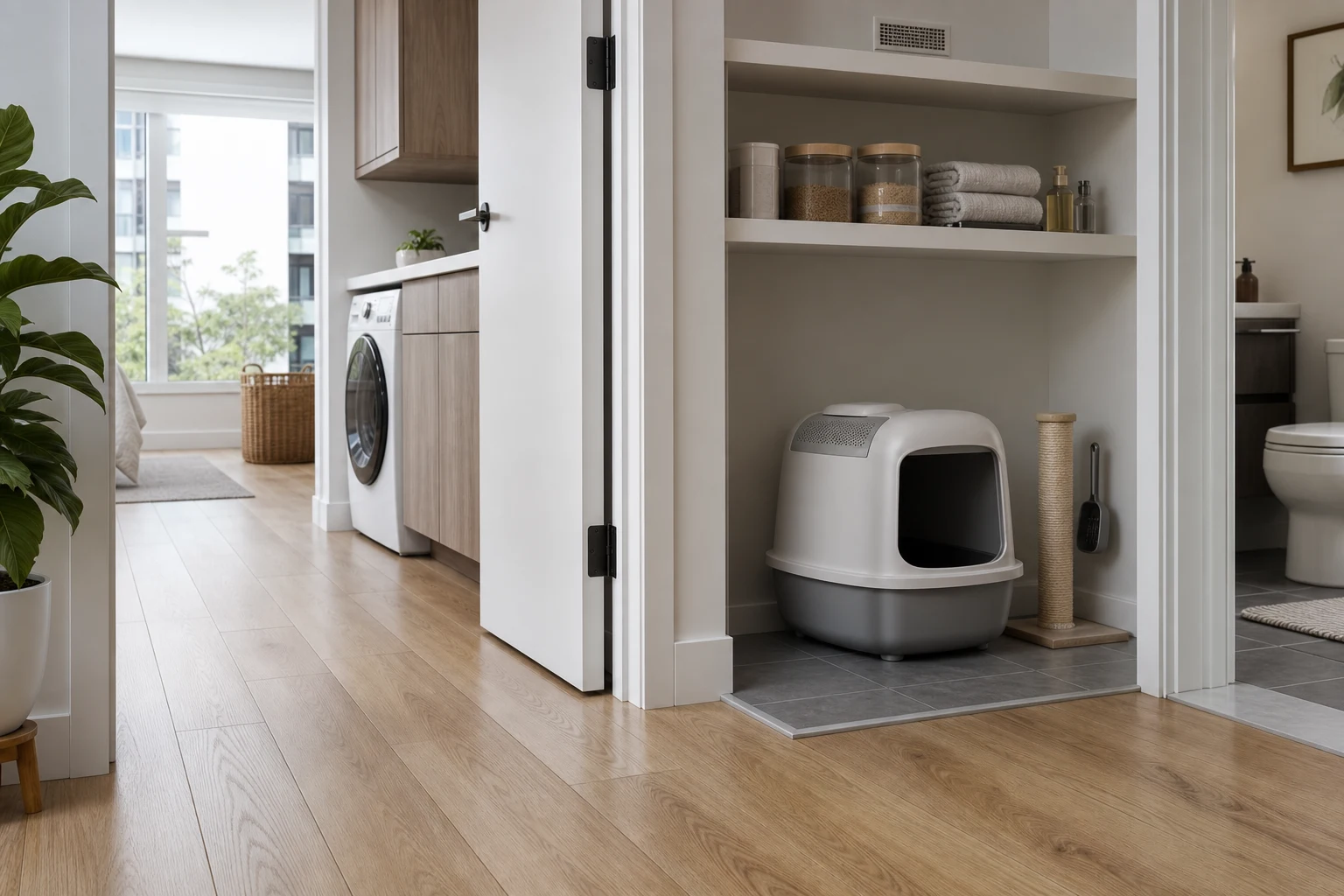
In a small apartment, the litter box must be easy for the cat to reach and easy for a person to clean without dominating food, sleep, or circulation. Hiding it too aggressively can create noise, odor, heat, trapped access, or a cleaning routine so awkward that maintenance slips. Start with behavior and hygiene, then solve the furniture appearance.
Observe the Cat Before Choosing a Location
Age, mobility, confidence, health, and relationships between cats change the plan. A kitten may need a low entry; an older or arthritic cat may avoid stairs or high thresholds. A timid cat needs visibility and an escape route, while a cat disturbed by a washer, exhaust fan, or slamming door may reject an otherwise convenient utility space.
Sudden toileting changes can indicate health or stress issues. Seek veterinary advice rather than treating every problem as a layout failure. Keep the current acceptable box available while introducing a new position or enclosure gradually.
Favor Quiet, Available, Predictable Access
Choose a place the cat can reach at all times, including when bathroom or laundry doors are closed. Avoid trapping the box in a closet that guests shut. Do not place it beside a loud appliance that starts unexpectedly, in a dead-end where another pet can block the exit, or in the only narrow route used by people.
Provide more than one approach or a clear sightline when cat conflict is possible. In multi-level homes, mobility and distance may justify boxes on different levels. Follow veterinary behavior guidance for box number and distribution rather than assuming one hidden station suits every household.
Separate Toilet, Food, Water, and Sleep
Do not put the litter box beside feeding bowls or a favorite sleeping area. In a studio, use distance and a physical zone change: the opposite side of a storage unit, a ventilated utility alcove, or a bathroom edge that remains accessible. Never put food on top of an enclosure simply because vertical space is limited.
Keep the box away from kitchen preparation surfaces and direct heat. A balcony is rarely a reliable primary location because doors close, temperatures change, rain enters, escape risk increases, and building rules apply.
Size the Box and Entry for the Cat
Many decorative cabinets are sized for human taste rather than a cat turning and digging. Compare internal dimensions, entry height, opening width, lid movement, and the cat’s body length. Large cats need a genuinely large tray; covered boxes are not preferred by every cat and may concentrate odor.
If using an enclosure, preserve ventilation and a direct exit. Avoid maze-like double turns unless the cat already accepts them. The door should not swing into the human walkway, and the tray must slide out without lifting it over furniture.
Design the Cleaning Envelope
Draw the person kneeling or standing, removing the lid, lifting a waste bag, sweeping tracked litter, and carrying the tray to a wash point. Reserve a nearby sealed bin and a small shelf for scoop, liners if used, and cleaning supplies kept safely away from pets and children.
Use a washable, moisture-tolerant floor or a removable mat with enough edge beyond the entry. Protect skirting and wall corners if the cat sprays or scratches. Do not create a sealed, upholstered cabinet that absorbs odor and cannot be disinfected.
Manage Ventilation Without Strong Fragrance
General room ventilation and frequent cleaning matter more than masking odor. Do not improvise a powered exhaust connection without building and electrical review. Avoid strong perfumes that may deter the cat or irritate occupants. Keep existing vents clear and use only products appropriate for cats.
Humidity matters in bathrooms and laundry rooms. Keep litter dry, prevent shower spray from reaching the tray, and store supplies in sealed containers. If an enclosure becomes warm or stale, enlarge openings or select a more open design.
Protect Human Circulation and Privacy
The box should not narrow the entrance, block a wardrobe, or sit where bare feet step out of bed. Give it a visually calm background rather than placing it as the focal point. A low screen can help, but it must not create a trap or prevent cleaning.
The broader pet-friendly apartment guide covers flooring, resting, feeding, and storage. Treat the litter zone as one connected part of that system.
Test Two Locations in 3D
Model the apartment in the Aedifex room planner with the exact tray, open lid, cleaning person, doors, appliances, food, and cat routes. Compare a bathroom-edge location with a ventilated utility alcove. Use the 3D demo to check whether a screen blocks visibility or makes the hall feel narrow.
Simulate a closed bathroom door, laundry running, a guest arriving, nighttime access, and a complete tray change. If any scenario removes access or makes cleaning impractical, choose the other location.
Litter Box Placement Checklist
- Consider the cat’s age, mobility, confidence, and health.
- Keep access available at all hours.
- Avoid loud surprises, dead ends, and pet ambush points.
- Separate the box from food, water, sleep, and food preparation.
- Size tray, entry, and enclosure for the actual cat.
- Preserve ventilation and a direct exit.
- Draw lid removal, scooping, sweeping, and full tray cleaning.
- Use washable surfaces and safely stored supplies.
- Keep doors, wardrobes, and human routes clear.
- Introduce a new position gradually and seek veterinary advice for sudden changes.
Once the cat and cleaning routes work, use the interior planner to integrate a durable screen or cabinet and register to save the plan.