Countertop Dishwasher Placement: A Small Kitchen Plan
Find a practical countertop dishwasher position by checking loaded weight, water filling, lid clearance, drainage, door travel, and daily preparation space.
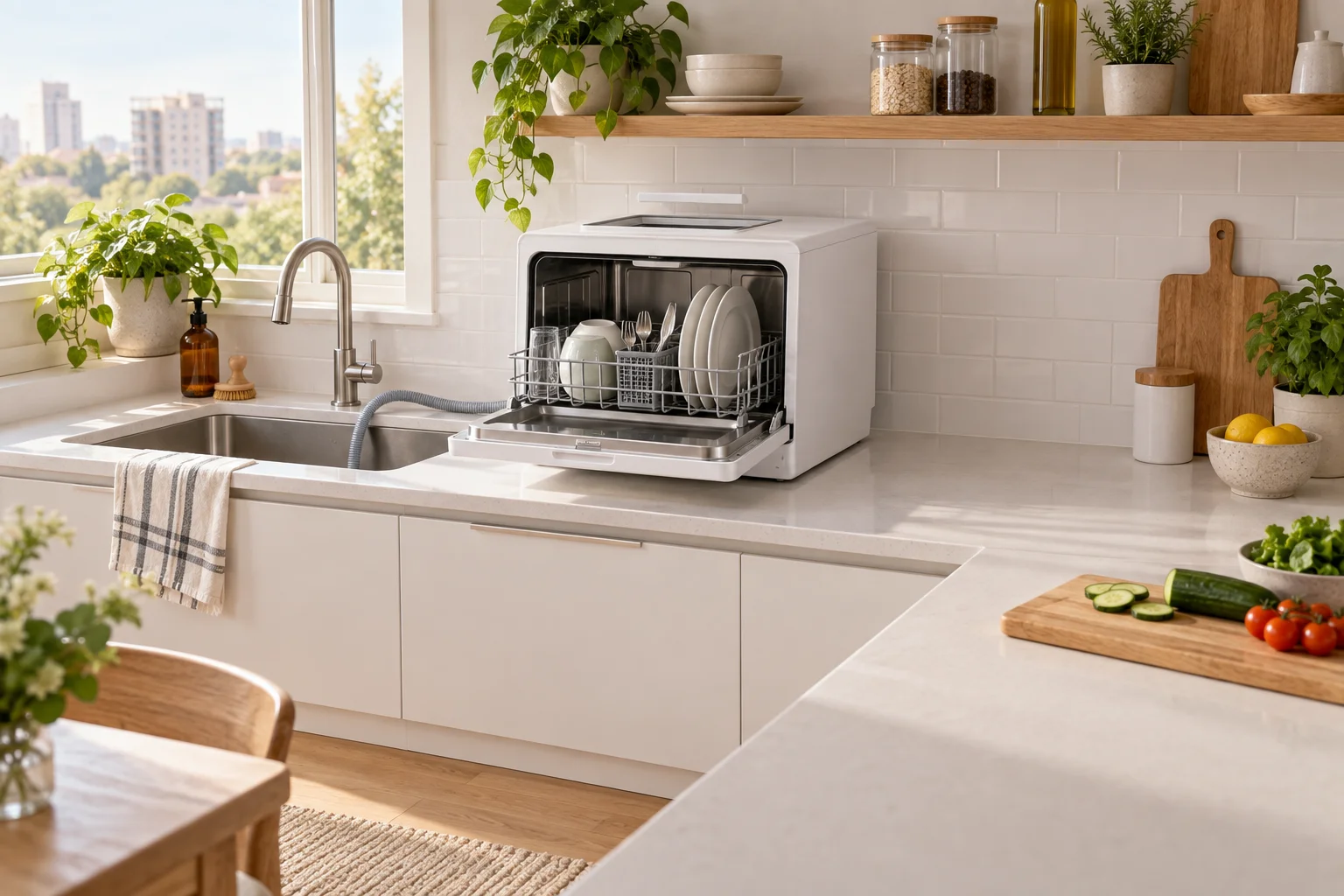
A countertop dishwasher can remove a daily chore while creating a new planning problem: the appliance occupies the same small worktop used for chopping, draining vegetables, and making breakfast. Models with refillable tanks also need space above the machine, and their drain hoses still need a suitable outlet. Before choosing a position beside the sink, examine an entire wash cycle from scraping plates to putting clean cups away. The useful footprint includes much more than the closed box.
Choose the Water Arrangement First
Portable countertop products do not all connect in the same way. Some use a refillable tank, some require a tap adapter, and some support more than one arrangement. Confirm the exact model's supply and drainage instructions before planning the kitchen. A tank removes the need for a permanent supply connection in some installations, but it does not eliminate drain routing or the need to carry water to the appliance.
If using a tap adapter, check compatibility with the actual faucet and whether the connection prevents normal sink use during a cycle. Pull-out spray heads and unusual thread arrangements may not accept the supplied adapter. If using a tank, find the filling point, the supplied container's height, and the angle needed to pour without spilling. These details can decide whether an apparently convenient position beneath a wall cabinet is workable.
Check the Loaded Weight and Supporting Surface
Read the dry appliance weight, water capacity, maximum load, and the support requirements in its manual. As an illustrative calculation, a 14 kg appliance with 5 liters of water and 4 kg of dishes reaches about 23 kg before allowing for any other stored contents. Use the actual product values for your decision. A thin shelf, an overhanging draining board, or a light utility cart should not be assumed suitable because the machine fits on top.
The surface must remain stable with the front door open and the rack pulled out. Confirm its load rating, level, moisture resistance, and support beneath the machine's feet. If a cabinet or worktop supplier needs to assess the load, provide the full operating condition. Avoid improvised blocks or a surface that rocks when a rack is loaded; movement can strain hoses and increase spill risk.
Measure Above the Appliance, Not Only Around It
Consider a machine 450 mm high beneath a cabinet whose underside is 600 mm above the counter. The remaining 150 mm may look generous in a photograph but may not allow a tank lid to open or a filling jug to tilt. Mock up the lid and container at full size. Check the entire pouring movement, including the user's hand, rather than measuring only the container standing upright.
Manufacturers may also specify space for ventilation or vapor release. Preserve those requirements independently of filling access. Do not treat an openable cabinet door as a substitute for a permanently suitable appliance location. If the model cannot be used under your wall cabinet, compare a different filling design or a genuinely open counter position instead of planning to slide a heavy, connected machine out for every cycle.
Account for the Open Door and Rack
Mark the closed front, open door edge, and fully extended rack. A machine body approximately 500 mm deep might occupy much more depth during loading; consult the exact drawing rather than assigning a generic projection. Measure from the open appliance to the opposite cabinet or table, then add the operator's position. The user must be able to lower plates into the rack without standing in a doorway or twisting over a hot cooking surface.
A corner can create a less obvious collision. The open dishwasher door may block a drawer containing cutlery, or a nearby cupboard may strike the rack. Simulate loading dirty plates and unloading clean utensils separately. The most efficient location is not necessarily the one closest to the faucet if it makes every unloading movement awkward.
Keep Drainage Secure and Inspectable
Follow the manufacturer's permitted hose length, lift, connection method, and outlet arrangement. These values differ between products and cannot be inferred from the hose supplied in the box. Keep the hose free of kinks and positioned so it cannot be knocked loose while someone uses the sink. Where the instructions permit discharge into a sink, secure the outlet exactly as specified and make sure the sink can drain freely.
Do not extend a hose or alter plumbing simply to reach a preferred visual position without confirming compatibility. A permanent connection may need a qualified installer and local compliance checks. Leave connections accessible for inspection. The appliance should not hide a dripping joint behind an inaccessible stack of kitchen equipment, and a removable hose should have a defined storage position between uses.
Protect the Remaining Preparation Zone
Draw a rectangle for your largest cutting board and place a mixing bowl beside it. Then add the dishwasher, dirty-plate staging, and a space for clean items that need checking. If these objects overlap, the kitchen will need a deliberate sequence or a different appliance position. A counter 1,200 mm long loses nearly half its length to a 550 mm wide machine before any other objects are counted.
Separate the dishwasher from the cooktop according to both appliances' instructions and the kitchen's heat conditions. Avoid placing it where loading dishes brings hands across active burners. Check the electrical supply against the manual, with sockets and cables positioned to avoid water and hot surfaces. Do not rely on a trailing extension lead or a multiway adapter as the basis of the layout.
Test One Complete Evening Routine
Before purchase, make a cardboard box matching the proposed model and attach a flap representing its door. Use your usual dinner plates, a measuring jug, and a bowl to act out scraping, loading, filling, running, opening, and unloading. Time is less important than noticing the repeated awkward movement. Does filling require lifting a full jug above a comfortable height? Must dirty dishes occupy the only food-preparation surface?
Repeat with someone else preparing tea at the sink. In a studio kitchen, also test whether the open door blocks the route to the bathroom or entrance. If the machine moves to a cart, check the manufacturer's installation permissions, the cart's stability and load rating, and how hoses and power behave. A movable furniture solution introduces connection and tipping questions that a fixed counter may avoid.
Put the Operating Envelope Into Your Plan
Use the interior planning workspace to compare two candidate positions with the same appliance dimensions. Show the filling jug above the unit, the door in front, the operator, and the hose path as separate elements. Inspect the model at standing eye level in the demo. Record all final installation values from the appliance manual alongside the drawing.
Approve the location only when the support, supply, drain, electrical connection, door operation, and remaining prep space all work together. A countertop dishwasher is most useful when it reduces washing without making cooking harder. The full wash-cycle test is a better purchase guide than a photograph of a tidy closed appliance.