Dehumidifier Placement in a Small Apartment: A Guide
Plan a small-apartment dehumidifier location with clear airflow, tank access, safe power, drying-rack space, and a practical route for emptying collected water.
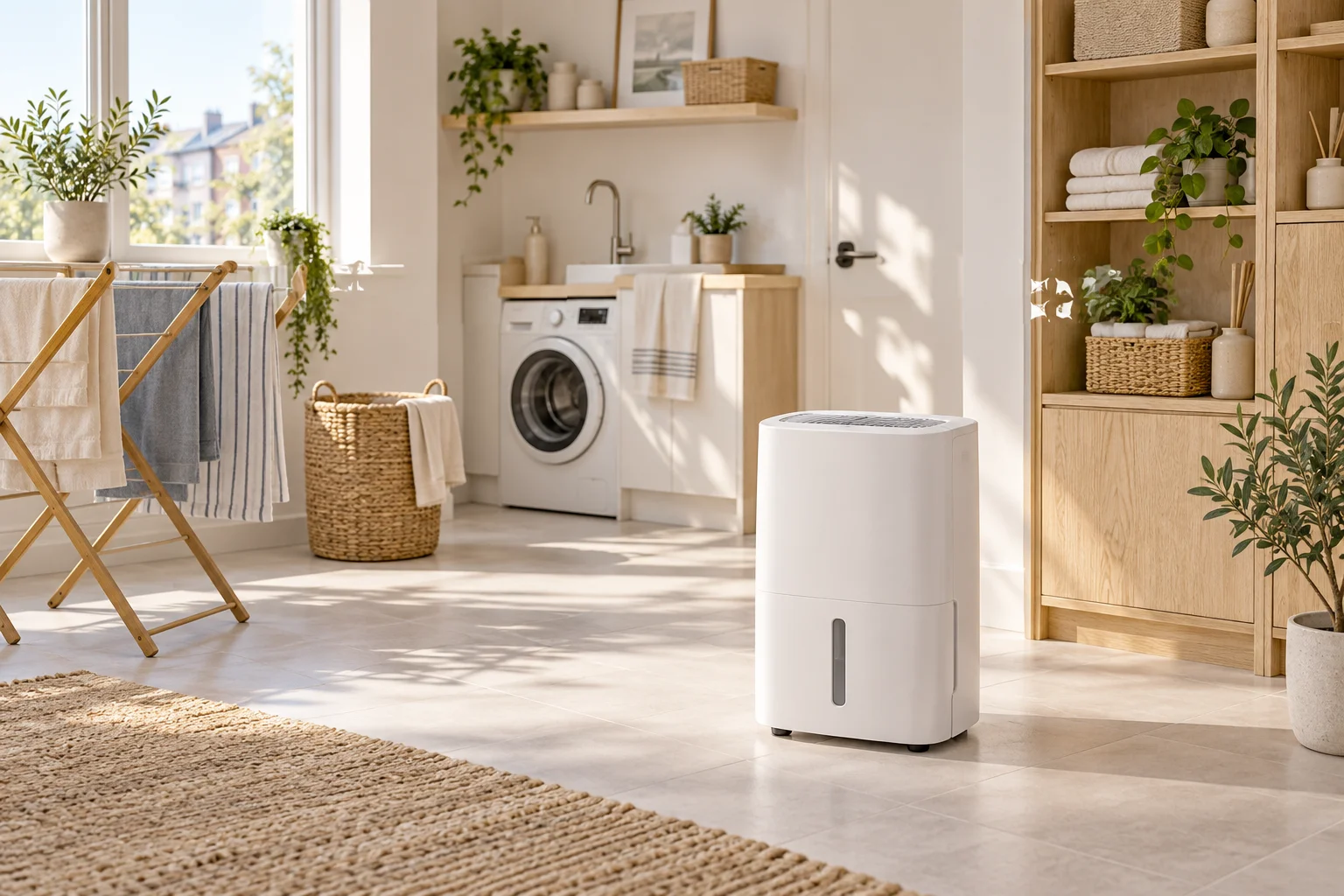
A dehumidifier in a small apartment needs more than an empty corner. It must draw and discharge air without obstruction, allow its water tank to be removed, and remain outside the route between the bed, kitchen, and bathroom. If it also supports indoor laundry drying, its working position may differ from its storage position. Planning those states before buying helps prevent a useful appliance from becoming a daily obstacle.
This guide concerns layout and everyday operation. Moisture control depends on the building, climate, appliance, and source of dampness. Follow the selected manufacturer's installation and operating instructions, and investigate leaks or persistent mold rather than treating appliance placement as a building repair.
Map the Moisture Problem Before the Furniture
Write down where and when moisture becomes noticeable. Is condensation concentrated around one window overnight? Does indoor laundry occupy the living area twice a week? Is there a bathroom ventilation problem? These situations suggest different operating routines and should not automatically lead to the same central-hallway position.
Measure humidity with a suitable instrument in representative locations, following its instructions and keeping it away from the appliance's immediate discharge. Compare readings across time and rooms. Avoid choosing an exact target solely from a floor plan: appropriate operation depends on conditions and the appliance guidance. Visible dampness after rain or a recurring wet patch needs investigation of the source.
Separate Operating Space From Parking Space
The device body is only one part of its footprint. Record the model's width, depth, and height; required intake and discharge clearances; tank removal direction; handle access; and any drain connection. Some units discharge upward, making an apparently spacious position beneath a low shelf unsuitable.
Draw the appliance where it runs, then show where it goes when not in use. A hallway storage position may work only after the appliance has been switched off and handled according to the instructions. It is not automatically a suitable running position. Moving it should not require lifting a full tank over furniture or pulling on its power cord.
Include the Person Emptying the Tank
A front-loading tank needs enough space to slide out and be held securely. Mark a standing area and the route to the sink or other appropriate disposal point. Carrying water through a narrow passage beside electrical equipment or over rugs is an avoidable inconvenience. Before buying, check the full tank weight and whether the user can comfortably carry it.
Work Through a Compact Apartment Example
Consider a 4.0 by 4.8 m living and sleeping room with a kitchenette near the entrance, a separate bathroom, a 1.4 by 2.0 m bed, and a sofa facing a wall shelf. An indoor drying rack occupies an illustrative 60 by 140 cm footprint when unfolded. These dimensions describe a comparison exercise, not required safety distances.
There are three candidate locations: beside the sofa, near the laundry rack, and outside the bathroom. Beside the sofa gives a short electrical connection but may interfere with a side table. Near the rack keeps the drying activity together but needs separation from wet garments. Outside the bathroom looks central but may reduce the only route to the exit and expose the appliance to splashes.
Draw all three with the manufacturer's clearance envelope. Eliminate any arrangement that cannot preserve the normal walking route. Then compare tank handling and noise at the seat or pillow. The best layout may be a living-room operating position during laundry drying and a separate, dry parking position afterward, provided moving and operating the unit follows its instructions.
Coordinate the Drying Rack Without Crowding It
The rack needs space for hanging garments, not just the metal frame. Sleeves and towels project beyond its outline, and the person loading it needs access along at least the useful side. Do not place dripping clothes over an electrical appliance. Follow both the rack's loading guidance and the dehumidifier's required separation from water and fabrics.
A laundry mode does not mean the machine can be pressed against the clothes. Aim the discharge only as permitted by the appliance instructions and keep all openings unobstructed. Check whether a door, curtain, or long garment can swing into the unit while it runs. If the combined setup blocks the room, a smaller laundry batch or different rack arrangement may be more practical than squeezing everything closer.
Choose Between Tank Collection and Continuous Drainage
Tank Collection
Tank operation avoids a permanent hose route, but it requires regular emptying. Place the appliance so the tank can be removed without disconnecting other equipment or moving the rack. Keep the floor dry and attend to spills promptly. A tank-full shutoff is useful but does not eliminate the need for routine checks and the maintenance specified by the manufacturer.
Continuous Drainage
A continuous drain needs an approved destination and an installation that matches the exact model. Gravity drainage generally relies on the required downward hose path; pumped systems have their own limits. Do not assume that every machine can push water upward or that an improvised hose can run across the floor safely.
Draw the full hose route, including doors and cleaning access. Avoid trip hazards, pinched sections, and unsupported assumptions about bathroom drainage. If the route requires plumbing changes, have the connection assessed by a qualified professional. For many renters, a conveniently accessible tank is simpler than a poorly planned permanent drain.
Account for Noise, Heat, and Electrical Access
A dehumidifier can change the comfort of the area around it while running. Test the intended operating setting from the sofa and sleeping position. Do not put it directly beside the pillow simply because that socket is free. Also consider whether its discharge makes the room feel warmer or directs air at the seated occupant.
Use the required power connection and follow instructions about extension leads. Keep cords away from water and out of circulation. Do not hide the plug where emergency disconnection requires dismantling furniture. The floor should be stable and suitable for the unit; an improvised raised platform is not a space-saving solution unless specifically approved.
Test the Whole Routine, Not One Photograph
Use the room planner to compare furniture and equipment positions. A simple block can represent the machine if the exact appliance is unavailable. Record operating and maintenance distances separately; the drawing does not model humidity or predict drying time.
Walk through a complete cycle: unfold the rack, hang clothes, operate the appliance, remove the tank, carry water away, clean the filter, and put everything back. Check the main exit route during each stage. The interior planning page can help organize the surrounding room, while the 3D demo provides a starting point for viewing furniture relationships.
Small-Apartment Checklist
- Identify the moisture source and investigate persistent damp problems.
- Apply the actual model's intake, discharge, and water-safety requirements.
- Show operating, tank removal, maintenance, and parking positions.
- Include hanging garments and the person loading the rack.
- Keep the exit route free of the appliance, cords, and hoses.
- Verify any continuous drain arrangement before relying on it.
- Compare comfort at the sofa and bed, then test the routine in person.
A successful layout makes water handling and maintenance ordinary tasks rather than furniture-moving events. Preserve that convenience when rearranging the apartment, because a setup that is awkward to service is unlikely to remain useful through a long damp season.