Furniture Layout Around Low Windows: Light, Heat, and Views
Arrange furniture around low windows without losing daylight, ventilation, heat output, views, safety, or access to curtains, handles, and cleaning.
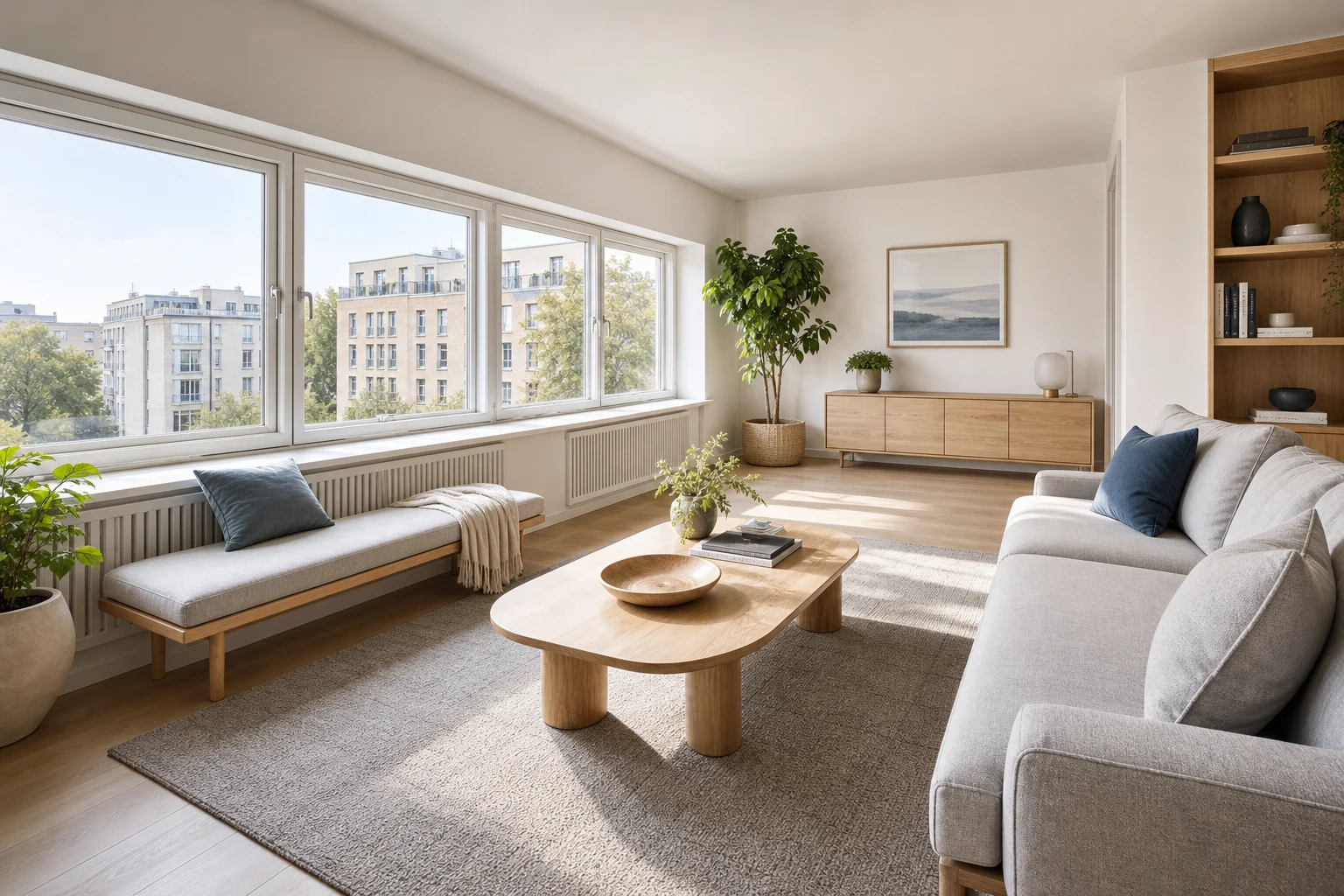
Low windows can make a room feel bright and connected to the outside, but they remove the wall height normally used for sofas, desks, storage, and televisions. Furniture that fits below the sill may still block an operable sash, trap heat from a radiator, create a climbing risk, or interrupt curtain movement. Treat the entire window wall as a working system rather than an empty backdrop.
Survey the Complete Window Assembly
Measure sill height, frame width, handle position, opening direction, restrictors, screens, radiators, floor vents, curtain stack, blind controls, and wall returns. Record the glazing type and any safety requirements for low-level glass. If the window is an emergency opening or part of a required ventilation strategy, preserve its mandated access and clear dimensions.
Open every sash fully and draw its interior projection. Tilt-and-turn windows, casements, and inward-opening doors can collide with furniture that appears safely below the sill. Include the space needed to remove screens and clean glass.
Rank Light, View, Ventilation, and Privacy
Decide what the window contributes. A garden view may support seating; a busy street may need privacy treatment; strong afternoon sun may create glare at a desk. An operable lower sash may be essential for ventilation, while a fixed picture window can tolerate different furniture relationships.
Observe the room at several times and seasons. The best sofa position may preserve winter sunlight but create summer overheating. Use blinds, exterior shading, or glass treatments appropriate to the building rather than blocking the window with tall furniture.
Use Low-Profile Furniture Deliberately
A sofa with a low back can sit in front of fixed glazing when there is adequate distance for curtains, cleaning, and air movement. A window bench, daybed, or low storage unit may align with the sill and turn the view into a feature. Confirm that finishes tolerate sun and that cushions do not rest against cold or damp surfaces.
Keep tall bookcases and wardrobes on interior walls. One low continuous piece often preserves more light than several mismatched objects. Avoid placing breakable decor where opening a window or drawing curtains can knock it down.
Preserve Radiator and Vent Performance
Low windows frequently have radiators or convectors beneath them. Follow manufacturer and professional guidance for clearances, airflow, valves, and combustible materials. A sofa pressed against a radiator can reduce heat circulation, overheat upholstery, and make controls inaccessible.
Draw the service route to bleed, clean, or replace the unit. Radiator covers change airflow and temperature and should be properly designed. Floor vents also need a free discharge path; do not hide them under a deep cabinet because it looks tidy in plan.
Keep Operable Windows Reachable
A deep sofa can put a handle more than a meter away, forcing someone to climb or lean over furniture. Provide a stable standing position and clear hand reach. If the furniture must move for cleaning, verify weight, floor protection, and how often that task is realistic.
Curtains need wall space to stack and floor area to hang without catching behind furniture. Roman or roller blinds may reduce fabric volume, but cords and controls need safe, accessible positions. Follow current child-safety requirements for window coverings.
Manage Television and Screen Glare
A television opposite a low window can reflect the entire bright wall. A desk facing the glass may cause high visual contrast, while a screen with its back to the window can silhouette the user on calls. Place screens perpendicular to the main daylight where possible and test actual sun angles.
If the only TV wall faces the glazing, use controllable shading and a mount or cabinet that supports a comfortable viewing height. Do not fill the low window wall with a tall television merely to avoid glare elsewhere.
Review Safety for Children and Pets
Furniture can become a step to a low operable window. Assess fall risk, restrictors, guards, and local requirements with qualified professionals. Do not place a crib, climbable storage, or unsecured bench where it increases access to a hazardous opening.
Keep blind cords, curtain loops, plants, and lamps out of reach. Confirm that safety devices do not compromise required emergency use. Low glazing in impact zones may require appropriate safety glass; verify existing conditions before renovation.
Create Layout Options by Window Type
For fixed glazing, test a low sofa or bench with a cleaning gap. For inward-opening windows, keep the handle and sash zone empty or use easily moved low pieces. For a window wall with a radiator, place the main sofa perpendicular and use lightweight chairs that remain outside the heat zone.
An empty strip can be the best answer. It preserves light, air, and view while making a narrow room feel larger. Assign circulation to that strip rather than forcing storage onto every wall.
Test the Window Wall in 3D
Build the exact sill, sash, curtain, radiator, sofa, desk, and storage in the Aedifex room planner. Show windows and curtains in open and closed states. Use the 3D demo viewpoint from seated height to compare view, glare, and the visual weight of furniture against glass.
Simulate opening, cleaning, drawing curtains, adjusting heat, and moving through the room. Repeat the check for daytime and evening privacy.
Low-Window Layout Checklist
- Measure sill, handles, sash swing, screens, and curtain stack.
- Confirm required ventilation, emergency access, and glazing safety.
- Keep radiators, vents, valves, and service routes functional.
- Use low furniture only with cleaning and airflow gaps.
- Place screens to control daylight glare.
- Preserve stable reach to handles and blind controls.
- Review climb and fall risks for children and pets.
- Compare furniture against an intentionally empty window wall.
Once the window system works, refine textiles and finishes in the interior planner, then register to save seasonal layout options.