Mudroom Pet Wash Station Layout: A Practical Guide
Plan a mudroom pet wash with safe steps, splash control, drainage, storage, ventilation, and a dry household route that still works on muddy days.
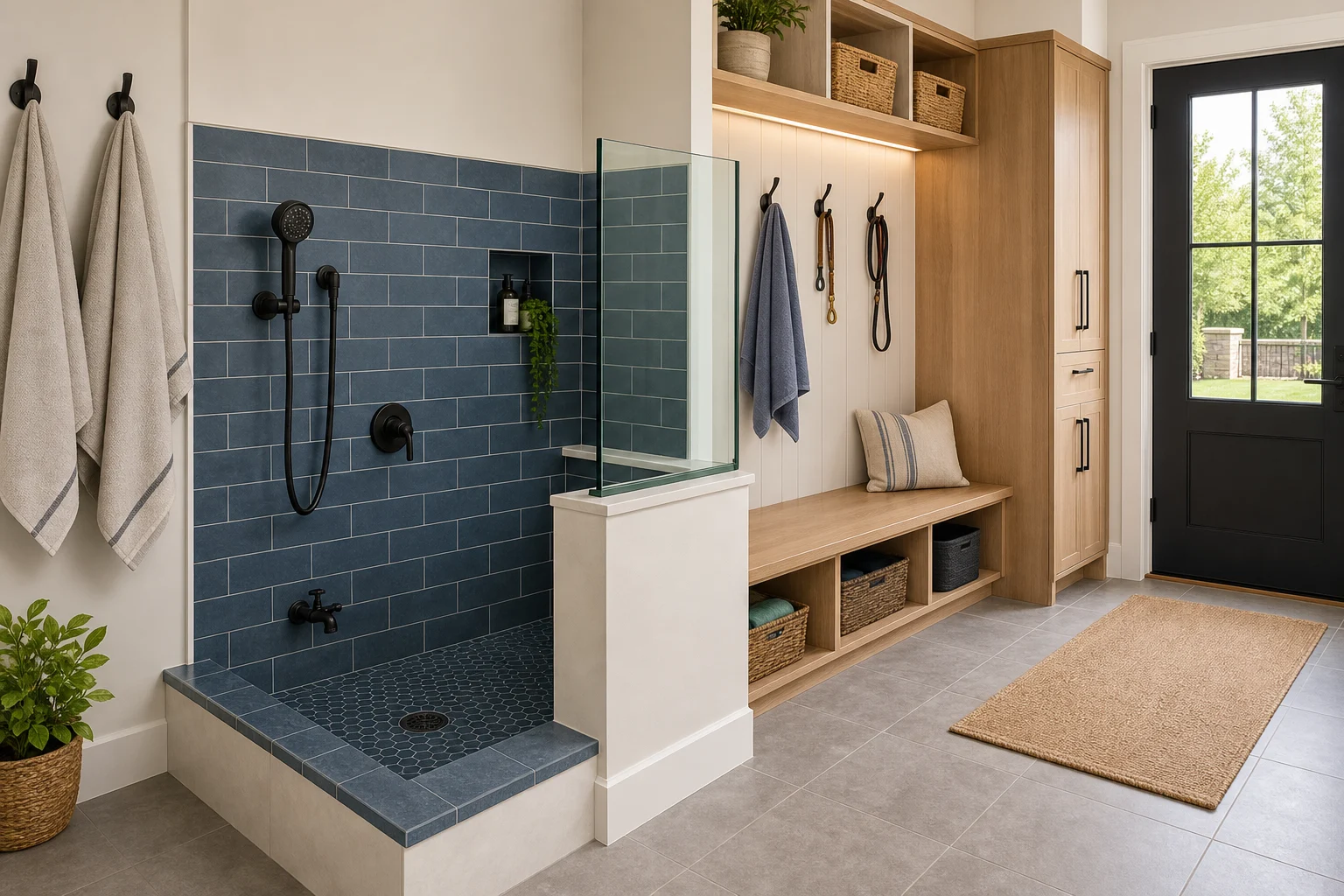
A pet wash station is successful when a wet animal can enter, be secured, rinsed, dried, and released without soaking coats, shoes, or the route into the house. The basin alone is only one component. Plan the approach, handler position, plumbing, towel storage, drainage, and cleanup as one wet workflow.
Start With the Pet and the Handler
Record the pet's standing length, shoulder height, weight, mobility, and tolerance for steps or lifting. Also consider the handler's reach and back comfort. A raised basin can reduce bending for a small dog but make entry unsafe for an older or heavy animal.
For large dogs, a low curb or floor-level shower with a controlled ramp may work better. Steps need non-slip treads, stable geometry, and a way to stay dry enough for exit. Never improvise a narrow removable ramp that can shift under load.
Size the Basin for Turning, Not Just Standing
The pet should stand without being compressed against controls and, if the routine requires it, turn safely. Provide enough wall height and splash protection for shaking. A very deep human shower can be awkward if the handler cannot reach the far side.
Mock up the basin with tape and cardboard before construction. Include the curb, glass or half wall, drain, handheld hose, shampoo shelf, and the pet's tail. Confirm that the handler can reach paws and underside without leaning dangerously.
Create a Controlled Entry Sequence
The route from exterior door to wash should avoid rugs, upholstered benches, electrical equipment, and open household storage. Place leash hooks where the handler can secure the pet before opening cabinets or water. The leash point must be designed for the expected load and should not create an entanglement hazard.
After washing, provide a dry landing area for toweling. A washable mat can help if it lies flat and dries quickly. Keep the main path to the kitchen or living room separate so another person can pass without entering the splash zone.
Put Controls Within Safe Reach
The handler should control temperature and flow without reaching across the animal. A handheld sprayer needs enough hose to reach all sides but not so much that it coils under feet. Provide a secure cradle that can be used one-handed.
Use appropriate anti-scald protection and qualified plumbing installation. Protect outlets and electrical equipment according to local wet-area requirements. A low outlet near a wet pet is not a convenient dryer solution unless specifically and safely designed for that environment.
Design Drainage and Waterproofing as a System
Slope the basin to an accessible drain and choose a strainer that catches hair without causing frequent backups. Plan how the strainer is removed and cleaned. Waterproof the basin, curb, penetrations, and adjacent splash surfaces as a complete assembly, not a collection of water-resistant finishes.
Provide a way to inspect for leaks and access valves or traps where required. Water outside the basin should not run beneath cabinetry or into the wall. If the room floor may get wet, coordinate its slope, threshold, and adjacent finishes with a professional.
Store Supplies at Point of Use
Keep shampoo, conditioner, brushes, towels, ear cleaner, and waste bags within reach but outside direct spray. Closed lower storage may be vulnerable to leaks; high open shelves may require the handler to release the pet. A shallow niche or protected ledge can hold the active products.
Reserve a ventilated place for damp towels and a sealed place for clean ones. Leashes and coats need separation from the wet wall. Cleaning tools should be close enough that hair and mud are removed immediately.
Control Moisture, Odor, and Noise
The station adds humidity to a room already receiving wet shoes and coats. Provide effective ventilation and surfaces that can dry. Avoid deep, unventilated cubbies for damp textiles. Washable wall finishes should extend beyond the obvious spray line.
Hard tile can amplify barking and water noise. Soft goods outside the wet zone, acoustic ceiling treatment, or a solid door may reduce transmission, provided ventilation remains adequate.
Coordinate Seating and Household Storage
A mudroom still needs space to sit, remove footwear, unload bags, open the exterior door, and access coats. Draw bench users, cabinet doors, drawers, baskets, and the pet-wash handler at the same time. Keep the clean storage face out of the most likely shake radius.
Use durable toe kicks and hardware. Elevated cubbies can protect shoes from water, but hooks and shelves must remain reachable for household users.
Test the Wet-Day Scenario
Build the exterior door, pet route, basin, steps, handler, hose, towel zone, bench, open cabinets, and dry walkway in the Aedifex room planner. Inspect splash lines with the 3D demo viewpoint and coordinate surfaces in the interior planner.
Pet Wash Checklist
- Match basin height and access to the pet's size and mobility.
- Test turning space and handler reach with a full-scale mockup.
- Provide stable non-slip entry and a separate dry landing zone.
- Keep controls, hose, leash point, and active supplies within safe reach.
- Detail drainage, hair capture, waterproofing, and service access.
- Separate clean coats, shoes, and towels from the splash zone.
- Ventilate damp textiles and choose washable finishes.
- Preserve door swings, seating, storage, and the household route.
When the full muddy-entry sequence works, register and save the station with exact fixture and pet dimensions for plumbing and cabinetry coordination.