Sofa Bed Guest Room Layout: Open, Sleep, and Store
Plan a sofa bed guest room around the fully opened mattress, bedside access, storage, lighting, and daily use so conversion stays simple and comfortable.
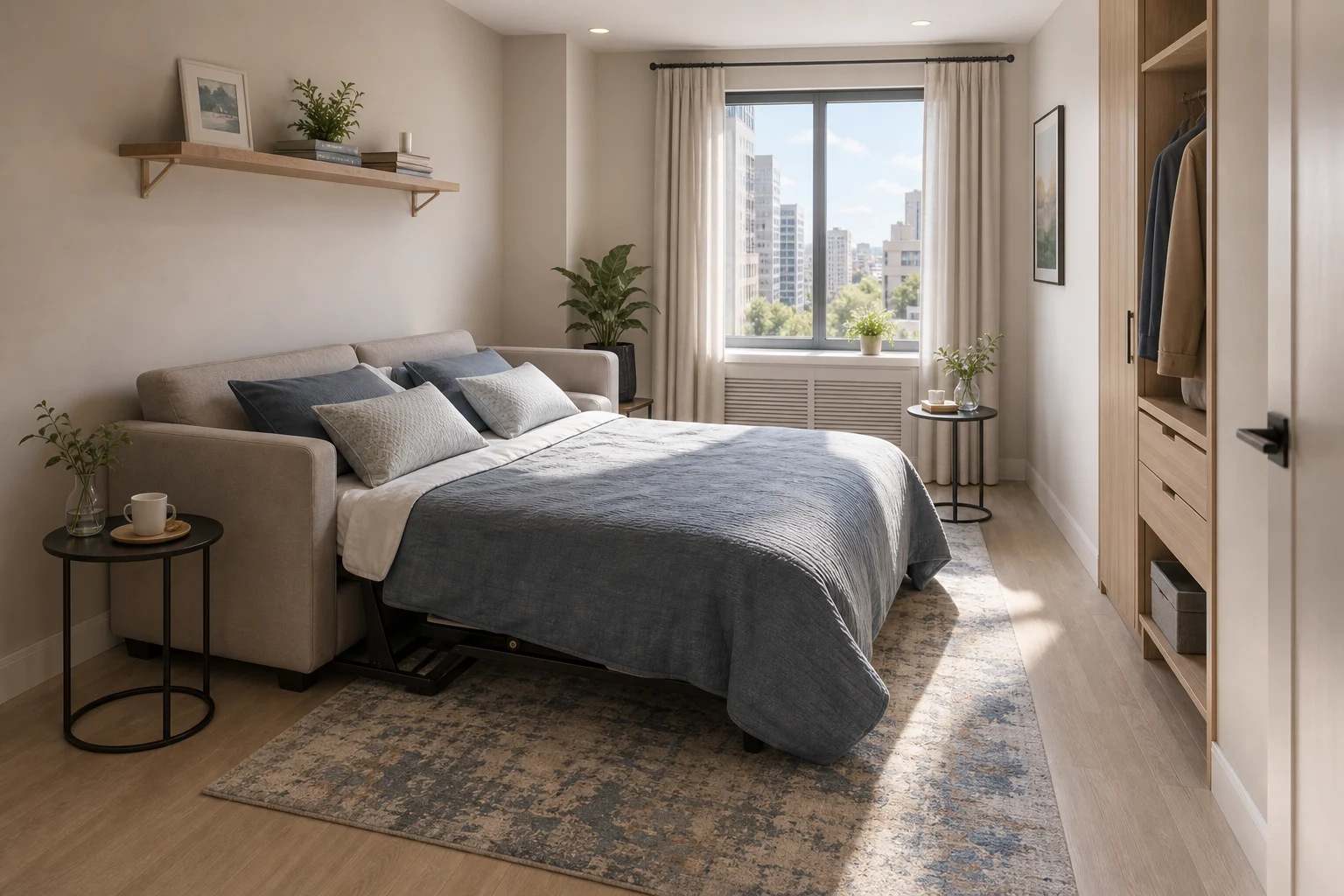
A sofa bed earns its floor area twice, but only when the room works in both modes. The folded sofa may leave a generous office, playroom, or reading area while the open mattress blocks the door, wardrobe, or only outlet. Plan the transformation as a sequence: clear loose furniture, open the mechanism, make the bed, reach both sides, store bedding, and restore the room the next morning.
Measure the Furniture in Both Modes
Record sofa width, folded depth, back height, arm width, seat height, and the complete open length. Include the mattress, frame, pull handle, rear movement, and any clearance required by the mechanism. Product listings often emphasize mattress size while omitting the few inches needed to pull and unfold it.
Measure the actual doorway and delivery route as well. A wide sofa may not turn through a narrow hall even if it fits the room. Removable legs or arms can help only when the manufacturer designed them to detach.
Draw the Full Conversion Envelope
The conversion envelope is larger than the final bed. A user may need to stand in front, pull the frame outward, step backward, and lower a section. Mark that movement zone separately from the sleeping footprint. Keep it clear of fixed desks, radiators, low pendants, and fragile tables.
Choose movable secondary pieces. Nesting tables, a light C-table, or a rolling ottoman can leave the envelope quickly. Give each item a parking place; otherwise conversion turns into moving clutter into the hallway.
Preserve Door and Window Access
The room door should open and close when the bed is ready. This matters for privacy and emergency exit. If the door swings into the mattress, consider a different sofa orientation or a properly detailed sliding or pocket door, while still meeting local requirements.
Keep a practical route to the window, especially if it is required for egress. Curtains, shades, and handles must remain reachable. Do not place the sleeper so close that bedding presses against a radiator, heater, or condensation-prone glazing.
Make the Sleep Mode Feel Intentional
Provide a usable surface and a light near the head of the open bed. Two full nightstands may be unrealistic, but wall shelves, narrow ledges, or movable tables can hold a phone and water. Switching should be reachable from bed without crossing a dark room.
Aim for at least one comfortable access side rather than centering the mattress at all costs. Where possible, keep roughly 24 inches (61 cm) on the main side and a smaller service gap on the other. Exact needs depend on users, mobility, and local standards. Older guests may need wider, obstacle-free access and a stable support surface.
Store Bedding Close to the Sofa
Assign space for sheets, pillows, duvet, mattress pad, and spare blankets. Storage inside a chaise or ottoman can work if it stays accessible when the bed is open. A high shelf is less useful if guests need a step stool.
Use breathable storage and launder bedding before long gaps. If the sofa has under-seat storage, verify that the opening action does not compete with the sleeper mechanism. Keep the manufacturer's folding limits in mind; thick toppers may not fold inside safely.
Coordinate the Daytime Function
Decide what the room does for the other 350 nights of the year. For a home office, keep the desk outside the conversion envelope and preserve a video-call background. For exercise, create a defined parking zone for equipment. For a media room, verify that the open bed does not cover vents or disconnect cables.
Avoid permanent furniture that serves only the daytime mode while making sleep setup difficult. A wall-mounted desk, compact bookcase, and closed cabinet usually adapt better than a deep freestanding workstation.
Check Mattress and Seating Comfort
Try the sofa as both a sofa and a bed. Seat depth, back angle, and cushion firmness matter daily; mattress support, seams, and bar pressure matter overnight. Confirm the rated sleeper dimensions because some products use nonstandard mattress widths.
A topper can improve comfort, but it needs storage. Protect adequate ventilation around the folded mattress and follow the product's cleaning instructions. A sleeper used by adults frequently may justify a higher-quality platform mechanism rather than a thin occasional-use mattress.
Design Lighting and Power for Both States
Use layered lighting: ambient light for conversion, focused light for reading or work, and a low night light for the route to the bathroom. Ensure plugs, charging points, and switches are not trapped behind the open frame. Route cords away from folding joints.
Window treatments should darken the room without being difficult to operate behind the bed. Check glare on a daytime monitor and early-morning light at pillow height.
Test the Room in 3D
Place the folded sofa, open bed, conversion envelope, door swings, wardrobe fronts, tables, desk chair, and storage in the Aedifex room planner. Inspect sleep mode with the 3D demo style view, then compare the everyday arrangement.
The interior planner can help coordinate wall lights, shelves, and calm finishes without filling the floor.
Sofa Bed Guest Room Checklist
- Measure folded, fully opened, and mid-conversion positions.
- Keep the room door and required window access functional.
- Give movable tables and chairs a defined parking place.
- Provide bedside light, charging, water, and at least one clear access side.
- Store all bedding near the sofa without blocking the mechanism.
- Protect heat sources, vents, outlets, and folding joints.
- Test daytime work, exercise, or media use separately.
- Verify delivery, mattress comfort, and user mobility needs.
Once both modes work, register to save the measured plan and keep a setup note for guests rather than rediscovering the furniture puzzle before every visit.