Renovation Budget Planning Checklist — Costs, Contingency, Scope
Build a renovation budget with hard costs, soft costs, permits, living disruption, contingency, change orders, and a sample $50,000 kitchen plan.
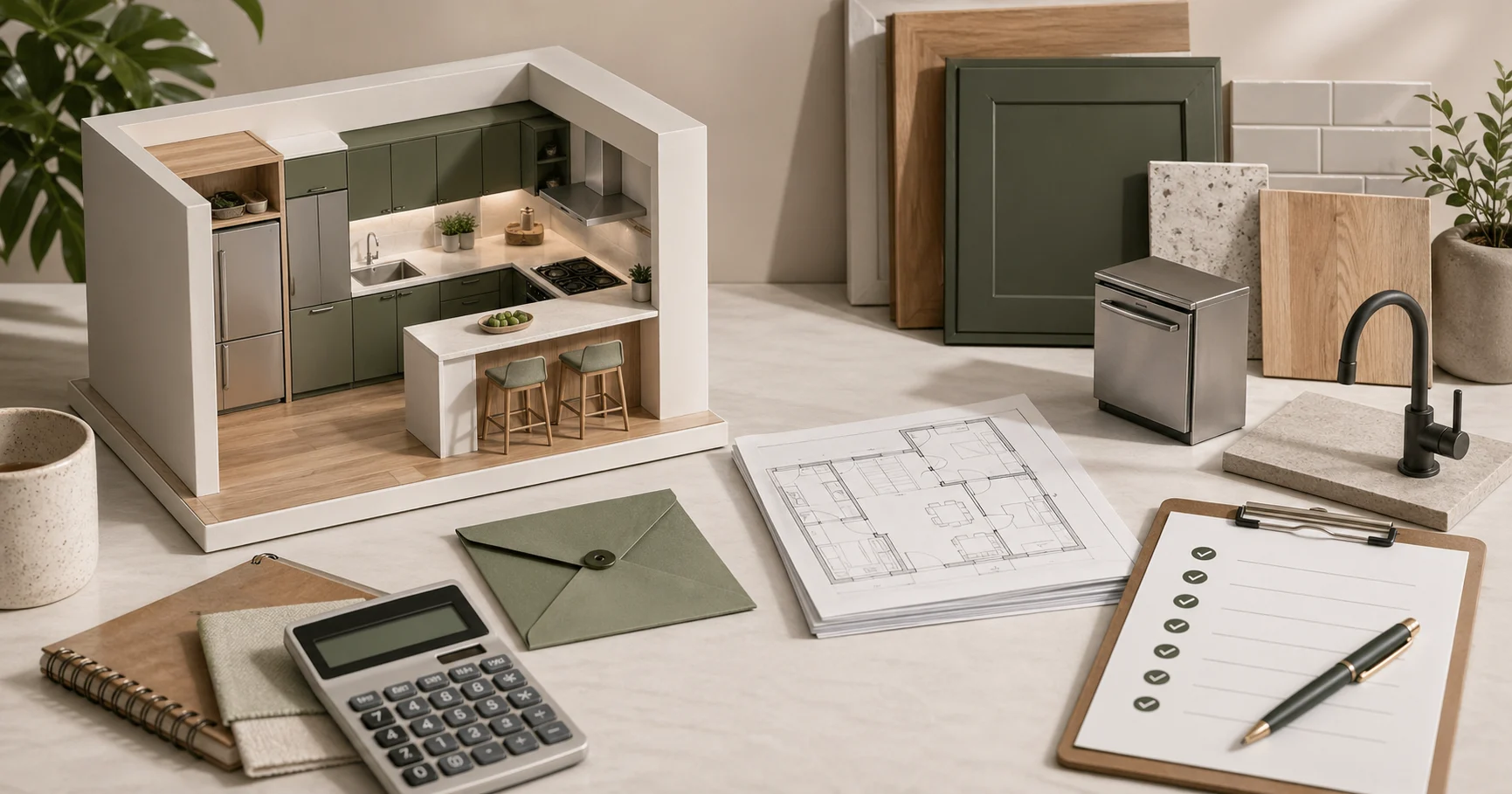
Renovation budgets fail when they only count visible work. Cabinets, tile, and labor are obvious. Permits, engineering, disposal, delivery fees, temporary living costs, and change orders arrive later. This checklist gives every cost a line before the project starts, then adds a contingency that is reserved for real surprises.
The Cost Categories
A renovation budget needs to cover all of these, not just the visible ones:
1. Hard Costs (Materials + Labor)
The physical work: demolition, framing, drywall, flooring, paint, tile, cabinets, plumbing fixtures, electrical fixtures, and installation labor. This is what most people mean when they say "renovation cost."
For a kitchen renovation in a major city circa 2026, expect $30,000-$80,000 in hard costs depending on size and finish level.
2. Soft Costs (Design + Permits + Engineering)
- Architect or designer: 10-15% of hard costs if used
- Structural engineer for any wall removal: $1,500-$5,000
- Building permits: 1-3% of hard costs depending on jurisdiction
- Plan-set drafting if you don't have an architect: $1,000-$3,000
People skip soft costs in the first spreadsheet and then pay them anyway, usually under time pressure.
3. Living Disruption
If your kitchen is out for 6 weeks, you'll eat out more or order delivery. Budget $40-$80/day for the household.
If the renovation is large enough to require relocation: short-term rental for the duration. Budget the local market rate.
4. Furniture, Fixtures, Appliances You'll Want After
The renovation makes the rest of the house look tired. Plan for at least one round of furniture and accent updates after the hard work is done. 5-10% of hard costs is typical.
5. Contingency
The line item that saves projects. Budget 15-20% of hard costs as contingency. Keep it separate from upgrade money. If you spend the contingency on nicer tile, it is no longer contingency.
What Blows Budgets
1. "While we're at it"
The most expensive phrase in renovations. Once walls are open, everything new looks shabby. The plumber suggests a tankless heater. The electrician suggests a panel upgrade. Each is reasonable; cumulatively they double the budget.
Decide which "while we're at it" items to include before the project starts, then say no to the rest. Write it down.
2. Hidden conditions
Old houses surprise you. Knob-and-tube wiring behind drywall. Cast iron pipes you'll have to replace anyway. Termite damage in the joists. Asbestos in the popcorn ceiling.
The 15-20% contingency is for this. Don't spend it on upgrades; reserve it for surprises.
3. Decision delays
Every day the contractor waits for you to pick a tile color or sign off on a change order, the project costs more. The most expensive backsplash is the one you pick three weeks late.
Make decisions in advance. Pre-select all materials before demolition starts. Aedifex is useful here: visualize the kitchen with three tile options before the contractor calls and asks.
4. Scope creep from the contractor
Some contractors low-bid to win the job and make profit on change orders. Read their contract. Demand a fixed price for the defined scope. Insist that any change be priced and approved in writing before work proceeds.
5. Tax and disposal
Many estimates exclude sales tax on materials and dump fees for demolition debris. Add 5-10% for these.
A Sample Budget for a $50,000 Kitchen
| Category | Amount | % |
|---|---|---|
| Cabinets + counters | $20,000 | 40% |
| Appliances | $7,000 | 14% |
| Plumbing rough + fixtures | $4,500 | 9% |
| Electrical rough + fixtures | $3,500 | 7% |
| Flooring (or repair) | $3,000 | 6% |
| Tile + paint + finishes | $4,000 | 8% |
| Demolition + disposal | $1,500 | 3% |
| Permits + engineering | $1,500 | 3% |
| Soft costs (design) | $2,500 | 5% |
| Living disruption | $2,500 | 5% |
| Subtotal | $50,000 | 100% |
| Contingency (20%) | $10,000 | — |
| Real budget | $60,000 | — |
The number to commit to your bank is the bottom one, not the subtotal.
Plan Visually First
A specific recommendation: before you commit to any renovation, build the future state in Aedifex and walk it. You'll catch layout problems before the contractor charges you to discover them. You'll also have a 3D reference to share with the contractor that prevents miscommunication on what you're paying for.
Open the demo, draft your current kitchen, then duplicate the project and design the future kitchen. Compare them side-by-side. The 30 minutes you spend doing this is the cheapest insurance against a $10,000 layout mistake.
Other Practical Reading
- Open Floor Plan: When It Works — before you knock down a wall
- Kitchen Design Online — 3D layout for the most expensive room
- Designing a 30 sqm Small Apartment — small-space discipline applies to renovation too
Build the Budget in Phases
A renovation budget is easier to control when each phase has a decision gate. Start with feasibility: measurements, existing conditions, rough scope, and whether plumbing, structure, or electrical systems must move. Then move to design: layout, finishes, fixture level, and storage. Only after that should you price construction.
Use three numbers for every phase: target, likely, and ceiling. The target is what you want to spend. The likely number includes realistic tradeoffs. The ceiling is the number that would make you stop or reduce scope. If you do not know the ceiling before work starts, every surprise becomes an emotional decision.
Separate must-have work from preference work. Replacing unsafe wiring is not the same kind of expense as upgrading to handmade tile. When bids come in high, this separation tells you what can be delayed without damaging the project.
How to Compare Contractor Quotes
Do not compare only the final number. Compare allowances, exclusions, timeline, payment schedule, warranty, cleanup, disposal, and who buys materials. One quote may look cheaper because it excludes permits, patching, fixture installation, or appliance reconnection.
Ask each contractor to price the same scope. If one quote includes custom cabinets and another assumes stock cabinets, the numbers are not comparable. If possible, provide a simple drawing, fixture list, finish level, and photos of the existing space.
Watch vague line items. "Miscellaneous carpentry" or "finish work" can hide real cost. It is fine for early estimates to be approximate, but the signed scope should be clear enough that both sides know what is included.
When to Reduce Scope
Reducing scope is not failure. It is often the difference between finishing well and running out of money. Keep the layout improvements that solve daily problems, then simplify finishes. A better cabinet layout with modest doors usually beats expensive surfaces on a bad plan.
Phase work when possible. Paint, freestanding furniture, and some lighting upgrades can happen later. Plumbing rough-in, waterproofing, structural work, and built-in dimensions are harder to change after construction starts.
Mistakes to Avoid
The first mistake is spending the contingency during design. Contingency is for unknowns, not upgrades chosen before demolition.
The second is forgetting temporary living costs. Eating out, laundry, storage, parking, pet boarding, or a short rental can become real money.
The third is changing decisions late. Every late change has two costs: the new item and the labor or delay caused by undoing the old plan.