Scandinavian Interior Design Guide — Light, Wood, Function, Restraint
Apply Scandinavian interior design with warm white walls, light wood, natural materials, layered lighting, restrained color, and testable room palettes.
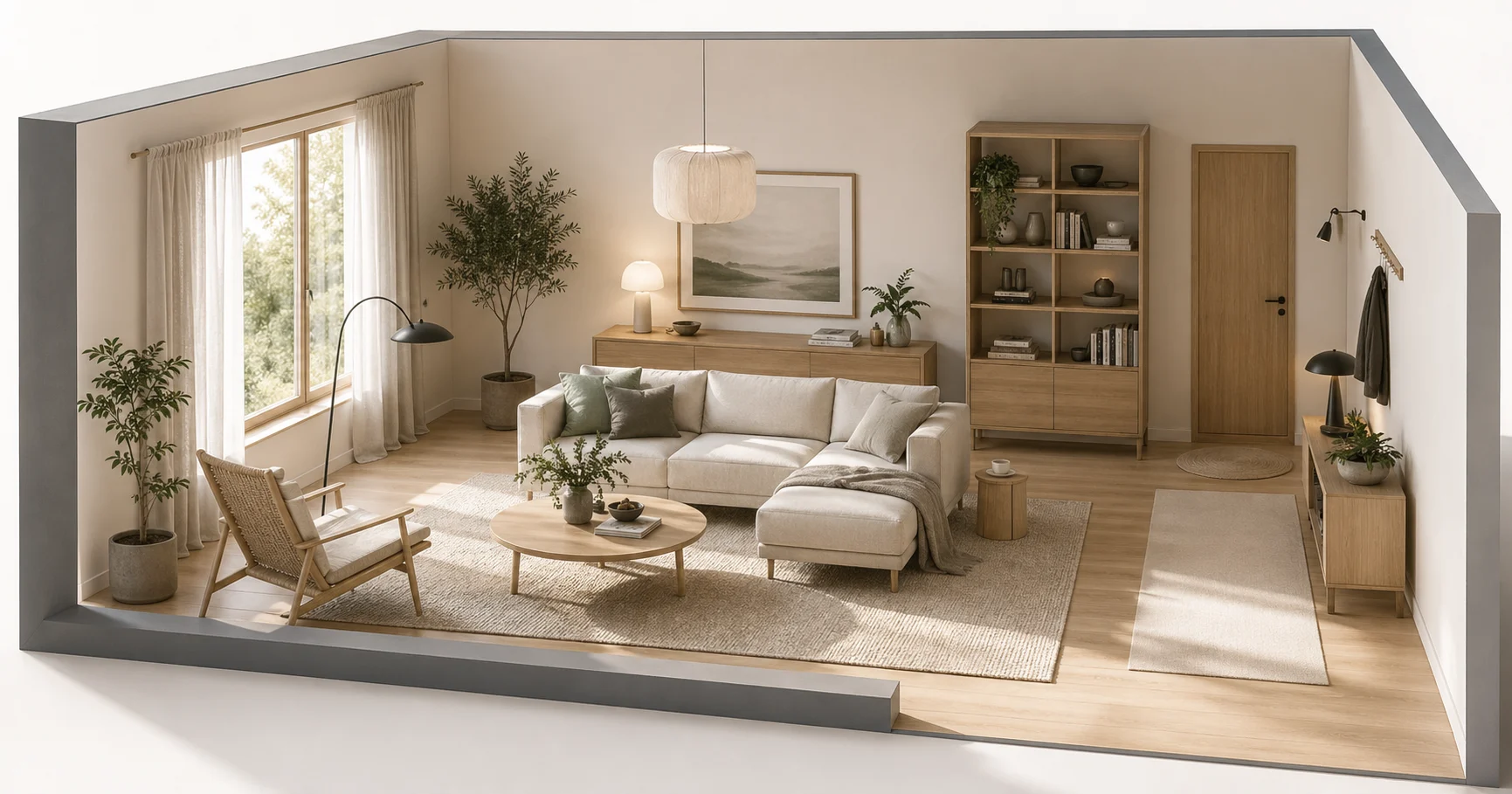
"Scandinavian" often gets reduced to white walls, pale timber, and a shopping cart of matching furniture. The stronger version is more disciplined: function comes before form, daylight is treated like a material, and decoration happens through fewer, better objects. This guide turns the style into decisions you can make in one room.
The Five Principles
1. Function First
A piece of furniture earns its place by the work it does. A coffee table that does not store anything has to be beautiful enough to justify its footprint. A storage ottoman earns twice: it holds blankets and still works as a table.
This is why Scandinavian rooms look uncluttered: every object has a job. Decorative-only objects are rare and chosen carefully.
2. Light Is the Hero
Northern Europe doesn't get much winter sun. Scandinavian design adapted by treating light as a material:
- Pale walls (soft white, warm white, light gray) reflect what light there is
- Sheer curtains, never heavy ones
- Mirrors strategically placed across from windows
- Multiple low-watt fixtures rather than one bright pendant (we covered this in lighting design for small rooms)
3. Natural Materials
Wood (especially light woods: oak, ash, birch). Wool. Linen. Leather. Stone. Things that age well and feel good to touch.
What you rarely see in convincing Scandinavian rooms: glossy plastic, chrome-heavy accents, shiny faux leather, or anything that feels disposable.
4. Restraint, Not Asceticism
A common misread: "Scandinavian = empty." It's not. A Scandinavian room is full — but full of chosen things. A bookshelf packed with books, a basket of wool blankets, a side table with a single lamp and a single ceramic.
The discipline is about choosing well, not performing emptiness.
5. Comfort
Despite the cool aesthetic, Scandinavian rooms are designed to be lived in. Soft seating, layered textiles, candles, real materials underfoot. Hygge — the Danish concept of cozy contentment — is part of the design DNA. A room that looks great but is uncomfortable to spend an evening in fails the test.
Applying It to Your Existing Room
You don't need to start over. Three changes that move any room toward Scandinavian without a renovation:
Change 1: Repaint One Wall (or Don't)
If your walls are loud — bright color, dark color — a coat of warm white on the most-visible wall changes the whole room's behavior. If they're already light, leave them. The mistake is dark walls + dark floors + dark furniture, which Scandinavian design specifically rejects.
Change 2: Replace One Synthetic Item with a Natural One
The polyester throw becomes a wool throw. The plastic side table becomes a wood one. The chrome lamp becomes a brass or matte black one with a natural-fiber shade. One swap a month over half a year transforms a room.
Change 3: Add Two Light Sources
If you have one ceiling pendant, add a floor lamp and a table lamp. Three light sources at varied heights (the rule from our lighting post) is what Scandinavian rooms always do.
What Doesn't Belong
- Heavy patterns: damask wallpaper, busy florals, geometric explosion rugs
- Glossy lacquered surfaces: high-gloss white, mirror-finish black
- Cool LED 4000K+: looks medical
- Imitation materials: laminate "wood," vinyl "leather"
If you have these, they are not design crimes. They are simply the first places to edit if the room is moving toward a Scandinavian palette.
Color Palettes That Work
Three palettes that reliably produce a Scandinavian feel:
- Pure white + warm wood + black accents — the most photographed
- Soft gray + birch + sage green — the "modern Nordic" version
- Warm white + walnut + ochre/mustard — the "70s nordic revival" version
Avoid pairing pure white walls with very dark wood floors and chrome — that combination reads as midcentury American or industrial, not Scandinavian.
Try It Before You Buy
Open Aedifex's demo, draw a simple room, and try the three palettes above using the material catalog. Switch lighting modes to see them at morning, afternoon, and evening. The right palette is the one that still works when daylight disappears.
Related reading: Studio Apartment Layout Ideas for small-space Scandinavian, Lighting Design for Small Rooms for the light-as-hero approach.
Room-by-Room Application
In a Scandinavian living room, start with comfortable seating, a clear path, and multiple low lights. The room should support reading, conversation, and winter evenings, not just bright daylight photos. Use a simple sofa, light wood table, textured rug, and one or two black or muted color accents.
In a bedroom, keep the palette quiet and the storage practical. White bedding alone is not enough. Add warm bedside light, a natural fiber rug, and a wardrobe plan that hides daily clutter. A Scandinavian bedroom should feel restful because the routine is supported.
In a kitchen, function shows through material choices. Light cabinets, wood counters or shelves, simple hardware, and visible task lighting work well. Keep open shelves edited. Everyday dishes can look good; random packaging rarely does.
In an entry, use hooks, a bench, shoe storage, and a mirror. Nordic homes treat entry storage seriously because weather gear is real. The look comes from solving the mess, not pretending it does not exist.
How to Add Color
Scandinavian rooms are not limited to white. Color is usually muted, natural, and controlled. Sage, dusty blue, ochre, rust, soft pink, forest green, and charcoal can all work when used in small amounts.
Use color where it can be changed: cushions, art, throws, lampshades, or one painted wall. Keep expensive fixed surfaces quieter unless you are certain. A small apartment can handle color better when the floor and large furniture remain calm.
Black accents are useful, but too much black turns the room industrial. Use black for thin lines: lamp stems, picture frames, chair legs, or cabinet pulls. Let wood and textiles carry most of the warmth.
Common Mistakes
The first mistake is buying a full matching furniture set. Scandinavian rooms often feel collected, not purchased as a bundle. Mix wood tones carefully and add personal objects with restraint.
The second is making the room too cold. Pure white walls, gray flooring, chrome, and cool bulbs can feel sterile. Add warm wood, soft light, wool, linen, or muted color.
The third is ignoring comfort. A beautiful hard chair that no one uses is not Scandinavian in spirit. Function first means real comfort, clear storage, and good light.