Small Balcony Design for Apartments: Seating, Plants, Privacy
Design a small apartment balcony with foldable seating, planters, privacy screens, lighting, storage, weather limits, and clear walking space.
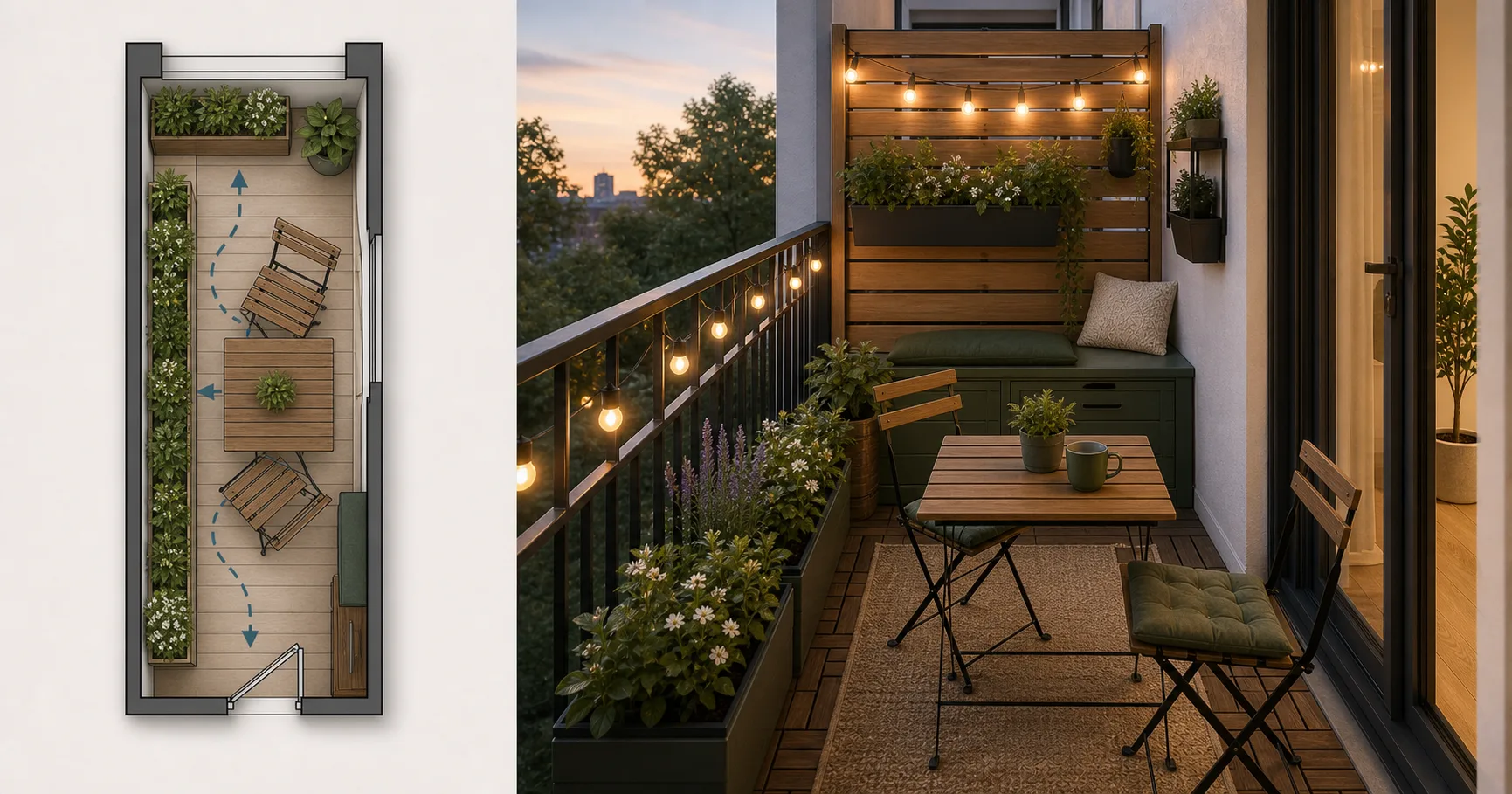
A small balcony should not become a storage shelf with a view. Even a narrow balcony can work as a morning coffee spot, herb garden, reading corner, or evening wind-down area if the layout respects weather, doors, and walking space.
Before buying outdoor furniture, test the balcony in Aedifex. A chair that fits on paper may still block the door or leave no place for feet.
Measure the Door First
The balcony door decides the layout. Mark the swing or sliding track, threshold, and the space needed to step outside safely. Furniture should not force people to step around chair legs immediately after crossing the door.
Keep one clear path from door to railing or storage. On very narrow balconies, use one side for planters and the other for movement.
Seating Options
Foldable furniture is often best for small balconies. A bistro table and two folding chairs can disappear when plants or laundry need space. A storage bench works when the balcony is wider and protected from rain.
Choose based on use:
- Coffee: small table plus one or two chairs
- Reading: narrow bench plus cushion
- Plants: wall rail planters and folding stool
- Dining: only if chair pull-out space remains
Plants and Privacy
Planters can create privacy, but they also consume width. Use railing boxes, vertical planters, or one tall corner pot instead of many floor pots.
Privacy screens should allow airflow. Avoid making a small balcony feel like a closed box unless wind or neighboring views demand it.
Lighting and Weather
Use outdoor-rated lights and furniture. String lights, small lanterns, or wall-mounted fixtures can make the balcony usable after sunset. Check drainage and wind before adding rugs or cushions.
Never block emergency access or building-required equipment. Apartment rules may restrict planters, screens, or drilling.
3D Check
In Aedifex, draw the balcony, door, railing, furniture, planters, and storage. Test:
- Can the door open or slide freely?
- Can someone sit without blocking the route back inside?
- Can plants be watered without moving every chair?
- Is privacy improved without killing airflow?
- Is there a bad-weather storage plan?
If the balcony works with furniture in use, it can become a real room. For more small-space ideas, see Studio Apartment Layout Ideas and Room Planner.
Layouts by Balcony Shape
For a narrow balcony, use furniture along one side only. A slim bench, folding chair, or rail-mounted table keeps the walking strip open. Avoid deep lounge chairs unless the balcony is wide enough for someone to pass while the chair is in use.
For a square balcony, create a corner arrangement. Two small chairs and a round table often work better than a rectangular dining setup. Keep one corner free for plants or storage so the floor does not become cluttered.
For a long balcony, divide it into two small zones: seating near the door and plants or storage at the far end. Do not spread tiny objects across the full length. A few grouped pieces look more intentional and leave better movement.
For a balcony with a great view, keep furniture low and avoid tall planters directly on the sight line. For a balcony facing neighbors, use vertical planting, woven screens, or sheer outdoor curtains where building rules allow.
Materials and Maintenance
Outdoor furniture needs to survive sun, rain, wind, dust, and storage limits. Powder-coated metal, treated wood, resin wicker, and outdoor fabrics are common choices. Cushions should be easy to bring inside or store in a waterproof box.
Floor decking can warm up a balcony, but check drainage and building rules first. Tiles or decking that trap water can damage surfaces or create mold. Outdoor rugs should dry quickly and should not block drains.
Plants need the same practical thinking as furniture. Choose species for sun exposure and wind, not only for photos. A balcony that receives strong afternoon sun may need drought-tolerant plants, larger pots, and a watering routine.
Privacy Without Losing Air
Privacy screens can make a balcony usable, but too much enclosure makes it hot and still. Leave gaps for airflow. Plants are often better than solid panels because they soften views without turning the balcony into a box.
If the balcony is overlooked from above, side screens will not solve the problem. Use a small umbrella, pergola allowed by rules, or seating position that faces away from the exposed angle.
Common Mistakes
The first mistake is treating the balcony as leftover storage. Once boxes and old furniture move outside, it stops being a room.
The second is buying indoor furniture for outdoor use. It may look fine for a week and fail after sun or rain.
The third is ignoring the door. If the door cannot open fully, the balcony will feel annoying every time it is used.
Before You Buy
Measure the usable floor after the door, railing, drain, outdoor unit, and required clearances are accounted for. Then choose one primary use for the balcony. A coffee balcony, plant balcony, and drying balcony can share space only when the furniture folds or stacks. Fixed furniture should support the main use, not every possible use.