Curtain Hem Clearance: Measure Above Floor Obstructions
Calculate curtain hem clearance over fixed floor obstructions, compare a shorter hanging length, and record changing floor levels across the fabric path.

A curtain can clear an open floor and still drag over a threshold elsewhere along its travel. Take measurements at the fabric path, using a consistent suspension datum, before deciding how much to shorten the hem.
Measure at the obstacle, not beside it
This hypothetical curtain hangs 2355 mm from its suspension datum to its lowest hem. The datum is 2400 mm above the local reference floor; a fixed threshold under the fabric is 32 mm high. Static clearance is 2400 − 2355 − 32 = 13 mm. Comparing it with a chosen 20 mm separation gives −7 mm. That is a reserve shortfall, not 7 mm of physical contact.
The downward fabric and upward floor obstruction must share the same vertical line for this comparison. A threshold outside the actual fabric path is not automatically a collision. Pleats and opening positions can move the relevant line, so record where each measurement belongs.
Shorten once, check several points
A 2335 mm hanging length increases the local gap to 33 mm and the margin against 20 to 13 mm. This loses 20 mm of floor coverage, which may affect appearance and light leakage. Raising the suspension can also alter length-to-floor, but bracket suitability and the top coverage must be checked independently.
At a second point, the same suspension datum is only 2380 mm above the local floor. With the revised 2335 mm length and the same 32 mm obstruction, clearance is 2380 − 2335 − 32 = 13 mm again; the trial margin is −7. Do not double-count the floor rise by also adding 20 to the obstacle height. Each obstacle height is measured above its own local floor.
The first diagram locates the initial reserve shortfall; the second tests shortening at the first point. In the hem exercise, select B and then change datum-to-floor to 2380 to expose the second-point failure. A positive result at one point cannot stand for the whole rail.
Record a path before cutting
Measure closed, partly open and fully open positions, identifying the lowest hem and highest fixed feature actually under it. Keep the tape vertical; a sloping tape overstates height. Record measurements after the intended fabric and heading are hanging as they will be used, and note any uncertainty rather than rounding to a favourable answer.
Test slow movement without forcing fabric over the obstruction. Snagging, moving folds or unmeasured local floor changes keep the decision open. The model does not predict fabric settling, washing shrinkage, airflow or fire clearances near heating equipment. Follow product-specific requirements where those conditions apply; the example's 20 mm is not a universal recommended gap.
Keep a measurement record
Download the worksheet (CSV). Label each measurement point along the curtain travel and record its local floor datum. Add closed, partial and open observations instead of overwriting the worst result. Only transfer a shortening dimension to the work order after all relevant points have been checked. For the broader adjacent topic, see the related planning guide.
Geometry and assumptions
Original downward section, mm: suspension datum to reference floor is 2400. Hanging length to the lowest hem is 2355. A fixed floor threshold under the fabric path is 32 high; the trial clear separation is 20.
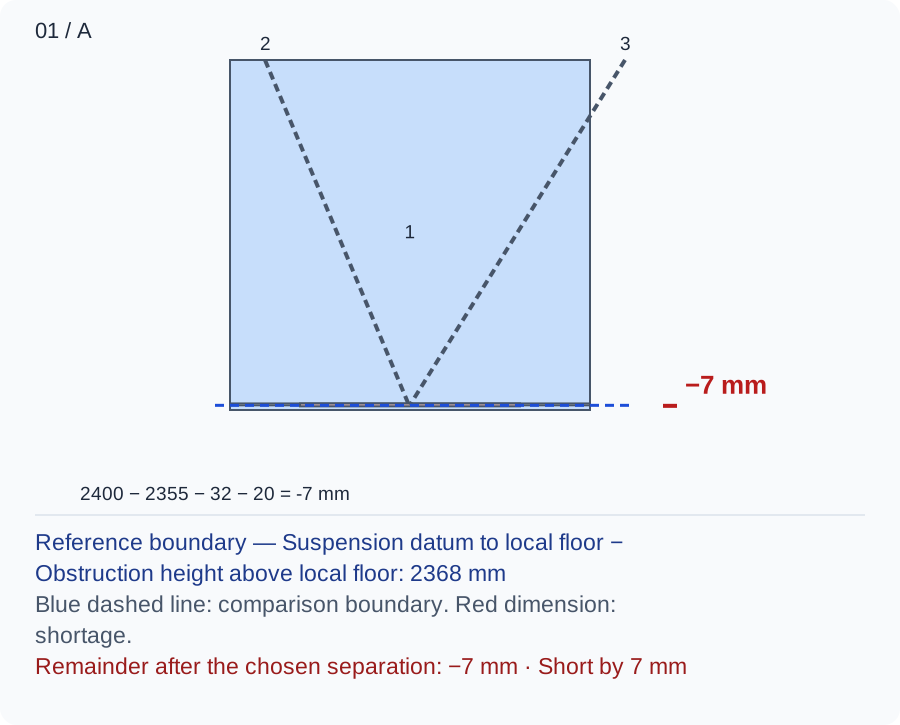
A leaves 2400 − 2355 − 32 = 13 above the obstruction; against the 20 trial, margin is −7. The hem does not touch in this static example, but the selected reserve is not met.
Numbers and marks identify the items described here; use the stated dimensions rather than measuring the screen.
1: fabric hanging down from top datum; 2: obstruction rising from bottom reference floor; 3: trial separation below hem. Boundary is obstruction top. Horizontal fabric motion is omitted.
| Input | A | B |
|---|---|---|
| Suspension datum to local floor (mm) | 2400 | 2400 |
| Length to lowest hem (mm) | 2355 | 2335 |
| Obstruction height above local floor (mm) | 32 | 32 |
| Trial separation below hem (mm) | 20 | 20 |
Changed conditions and evidence
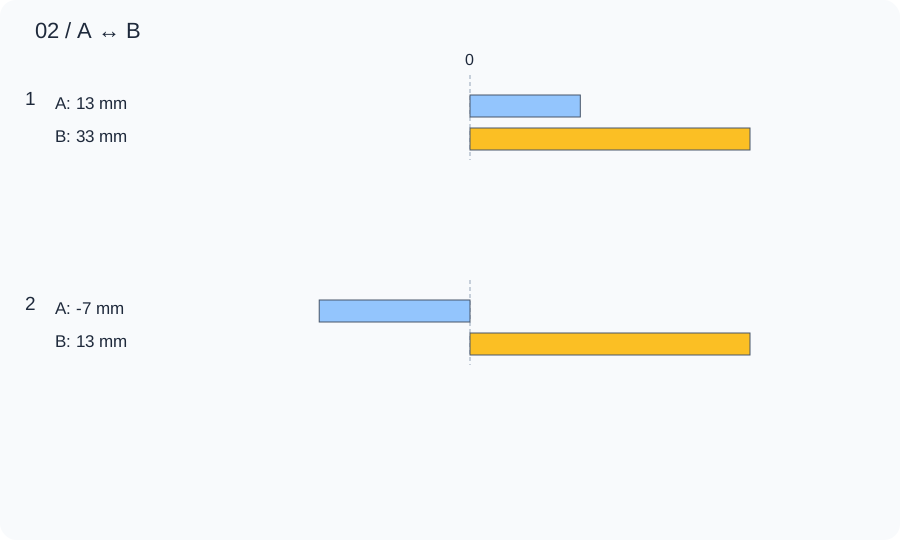
B shortens hanging length to 2335: clear gap 33, trial margin 13. At another point where the same datum-to-floor distance is 2380, gap falls to 13 and margin −7 again. A hem adjustment must be checked across the travel, not at one convenient point.
| Calculated relationship | A | B |
|---|---|---|
| 1. Physical hem-to-obstacle gap | 13 mm | 33 mm |
| 2. Remainder after the chosen separation | -7 mm | 13 mm |
Record the lowest loaded hem and highest local obstruction at closed, partly open and fully open positions. Test slowly without snagging. Fabric movement, settling, shrinkage and privacy are not predicted; 20 is a chosen exercise target, not a legal or product requirement.
TRY THE EXAMPLE
Curtain Hem Clearance: Measure Above Floor Obstructions
Original downward section, mm: suspension datum to reference floor is 2400. Hanging length to the lowest hem is 2355. A fixed floor threshold under the fabric path is 32 high; the trial clear separation is 20.
Allowed range: 1–10000 · Step: 1
Allowed range: 1–10000 · Step: 1
Allowed range: 1–10000 · Step: 1
Allowed range: 0–10000 · Step: 1
A negative remainder means the selected allocations overlap. Change the inputs or the proposal.
- Physical hem-to-obstacle gap
- 13 mm
- Remainder after the chosen separation
- -7 mm
Reference boundary — Suspension datum to local floor − Obstruction height above local floor: 2368 mm
Blue dashed line: comparison boundary. Red dimension: shortage.
Remainder after the chosen separation: −7 mm · Short by 7 mm
2400 − 2355 − 32 − 20 = -7 mm
Record the lowest loaded hem and highest local obstruction at closed, partly open and fully open positions. Test slowly without snagging. Fabric movement, settling, shrinkage and privacy are not predicted; 20 is a chosen exercise target, not a legal or product requirement.
Teaching assumptions, not a surveyed home or a construction check. Results describe this simplified geometry or budget only. Changes stay on this page and reset on reload.