Floor Lamp by the Sofa: Check the Shade and Route
Place a floor lamp near a sofa by measuring the base, projecting shade, cable and the route people actually use through the room.
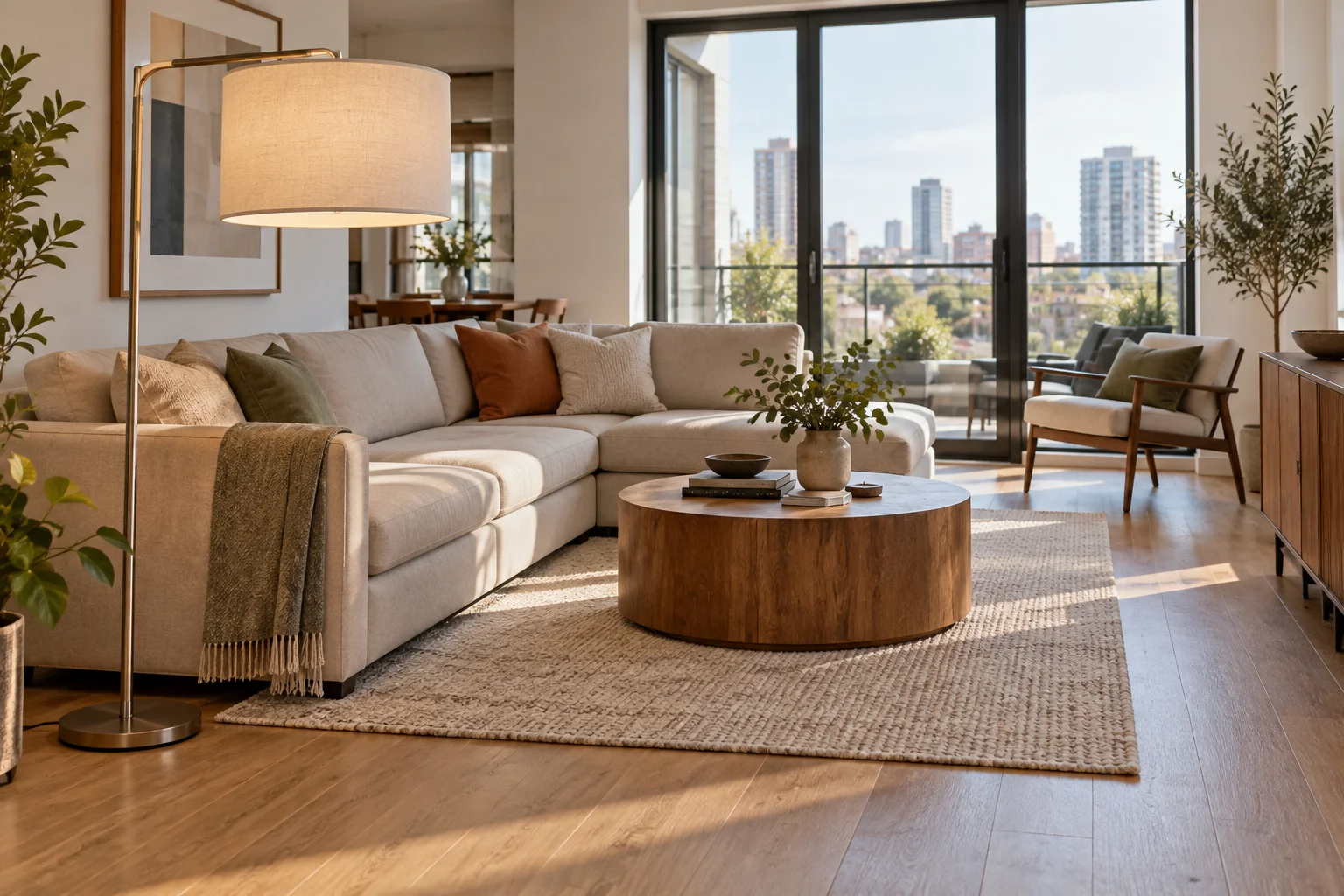
A floor lamp's base can fit beside the sofa while its shade extends into the route around it. A low shade, projecting arm and cable can create different conflicts at different heights. Compare the loaded lamp outline and the way the room is used, rather than placing the base in the first empty corner.
Measure the lamp at multiple heights
Measure the base, pole, arm and shade at their farthest points, including any adjustable positions. Record the height of each projection and whether the shade changes position when the arm moves. Use the product's instructions for assembly, stability, lamps and clearances; do not assume a floor plan can certify that a light is safe near fabric or furniture.
If choosing before purchase, treat published dimensions as provisional and ask for missing arm or shade information. A base that fits inside a gap does not establish that the shade or a person carrying a tray clears the same area.
Compare the sofa-side and corner positions
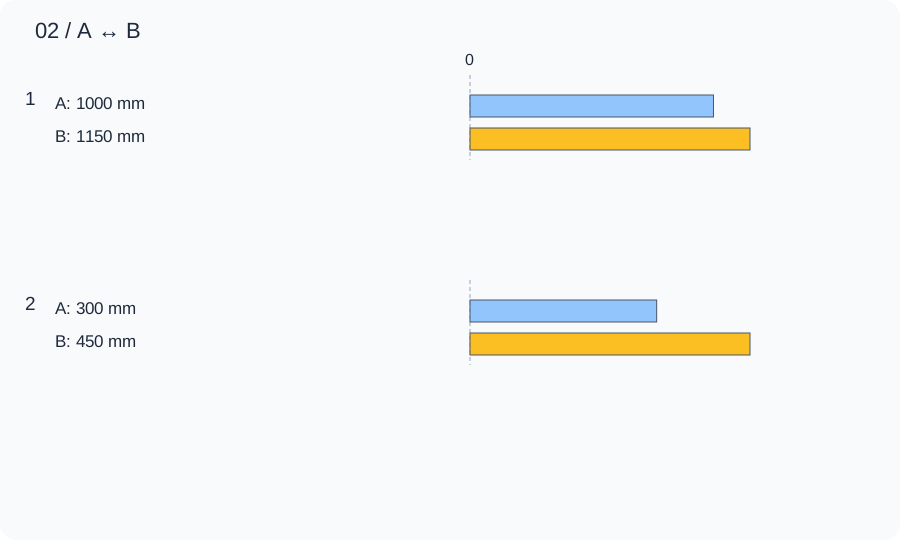
In this section at shade height, an available strip is 1600 mm wide. The shade projects 350 mm from one side and an opposing shelf projects 250 mm from the other. Their gap is 1000 mm. If the household selects an independent 700 mm trial envelope for an activity, the arithmetic balance is 300 mm. This is not a prescribed corridor width or proof of head clearance; it applies only at the stated section.
Moving the lamp so the projection into that section is 200 mm gives a 1150 mm gap and a 450 mm balance after the same trial. That move may change where the light falls or bring the base closer to a different obstacle. Measure the actual lamp and check both locations at base and shade height.
Test the complete route
With the lamp unplugged while arranging it, mark the base and shade outline using a stable temporary reference. Walk the usual route, sit and stand from the sofa, and carry the objects normally used there. Ask another person to steady a mock-up; stop if it is unstable. A taped floor outline does not show a low shade, so explicitly check height and head movement.
Route the cable according to the manufacturer, away from walking paths and areas where it can be pinched or covered by rugs. Do not alter the electrical fitting to make a position work. If a reachable outlet is unavailable, choose a different arrangement or seek appropriate electrical advice. Keep the lamp stable and follow its instructions around nearby materials and heat.
Decide what matters more
A corner position can free the sofa-side route but put reading light farther away. A smaller shade can preserve space but change light distribution. A table lamp or wall light changes the support and installation requirements. Compare the actual task, the available outlet and the movement you observed, then record the tradeoff. For a broader furniture comparison, see the living room layout guide.
Download the measurement and evidence record (CSV). Keep unknown values blank. The example uses the stated inputs. Record your own measurements and the source of each observation.
Geometry and assumptions
Hypothetical section in mm: 1600 available, shade projects 350, opposing shelf 250, independent activity trial 700. Other heights are not represented.
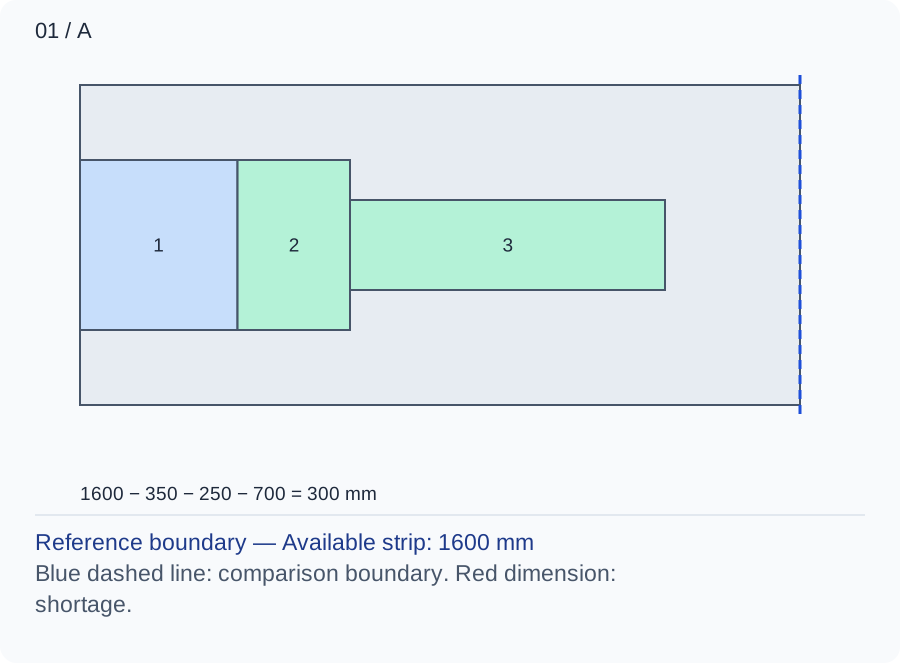
The shade and shelf leave a 1000 mm gap. Subtracting the chosen trial leaves 300 mm; this is not a head-clearance or route certification.
Numbers and marks identify the items described here; use the stated dimensions rather than measuring the screen.
1: shade projection at the selected height; 2: opposing shelf; 3: chosen activity trial. Bands show allocations, not exact positions; the base and cable are omitted.
| Input | A | B |
|---|---|---|
| Available strip (mm) | 1600 | 1600 |
| Shade projection (mm) | 350 | 200 |
| Opposing shelf projection (mm) | 250 | 250 |
| Chosen activity trial (mm) | 700 | 700 |
Changed conditions and evidence
B moves the shade projection to 200 mm, giving a gap of 1150 and balance of 450 mm. Check where the base, light and cable move as a result.
| Calculated relationship | A | B |
|---|---|---|
| 1. Gap at shade height | 1000 mm | 1150 mm |
| 2. Balance after activity trial | 300 mm | 450 mm |
Unplug while arranging, check the lamp at each height and test the real walking and sitting route. Follow manufacturer instructions for stability and materials.
TRY THE EXAMPLE
Compare the shade-height section
Hypothetical section in mm: 1600 available, shade projects 350, opposing shelf 250, independent activity trial 700. Other heights are not represented.
Allowed range: 1–5000 · Step: 1
Allowed range: 0–2500 · Step: 1
Allowed range: 0–2500 · Step: 1
Allowed range: 0–2500 · Step: 1
Positive remainder under these assumptions. Check the actual use and product requirements before choosing a layout.
- Gap at shade height
- 1,000 mm
- Balance after activity trial
- 300 mm
Reference boundary — Available strip: 1600 mm
Blue dashed line: comparison boundary. Red dimension: shortage.
1600 − 350 − 250 − 700 = 300 mm
Unplug while arranging, check the lamp at each height and test the real walking and sitting route. Follow manufacturer instructions for stability and materials.
Teaching assumptions, not a surveyed home or a construction check. Results describe this simplified geometry or budget only. Changes stay on this page and reset on reload.