Living Room Layout Ideas: TV, Sofa, Windows, Traffic Flow
Compare living room layouts for TV viewing, conversation, reading, storage, windows, rugs, and clear traffic flow before moving furniture.
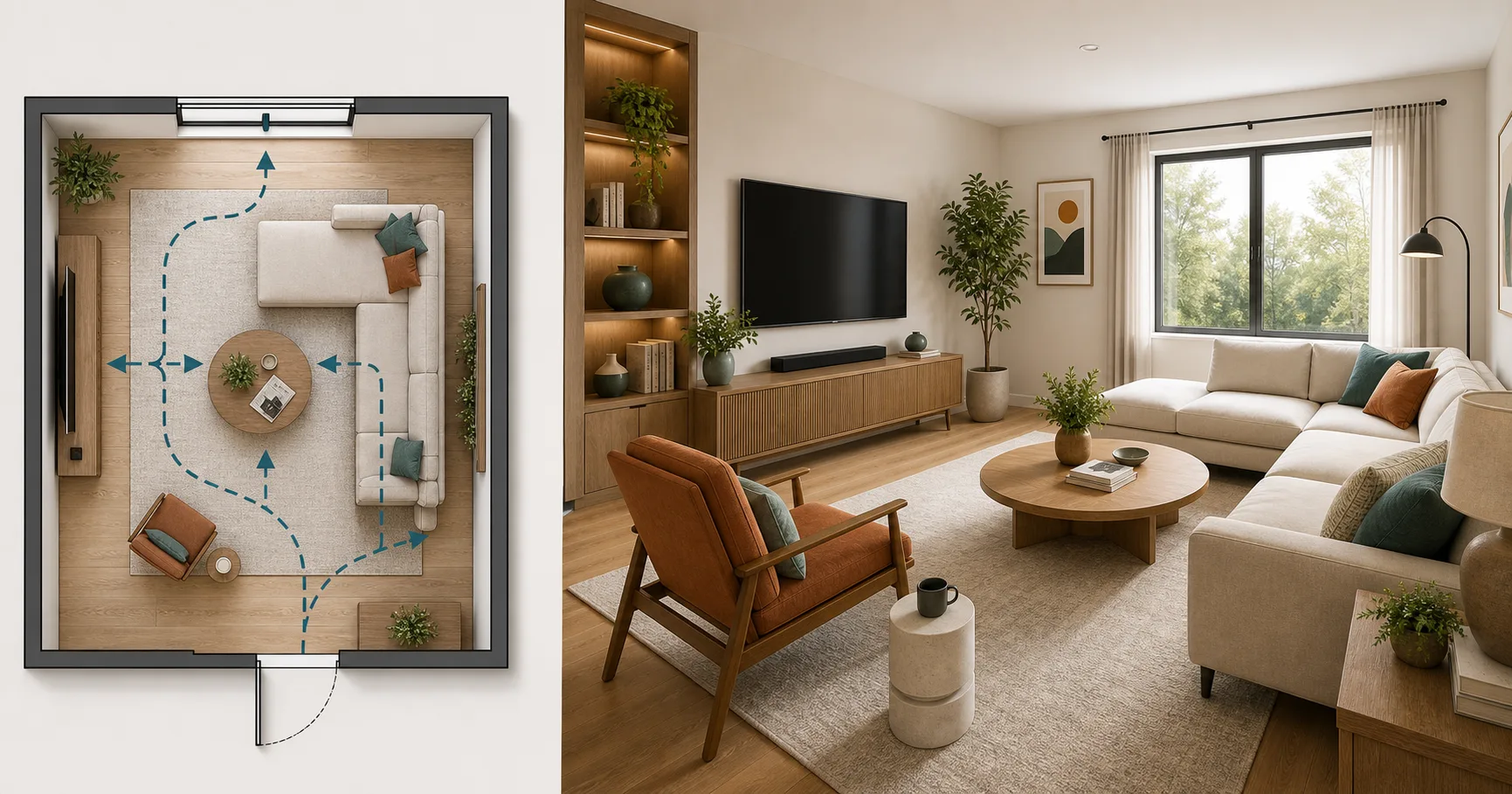
The best living room layout is not the one with the largest sofa or the most dramatic accent wall. It is the one that lets people enter, sit, talk, watch, read, and leave without rearranging the room every day. A good plan makes the main activity obvious and the walking paths quiet.
Before buying furniture, rebuild the room in Aedifex and test a few arrangements at real size. A 3D check is especially useful when the room has a window wall, balcony door, fireplace, or open-plan dining area competing with the TV.
Start with the Main Use
Most living rooms try to do too many things at once. Choose the primary use first:
- TV and movie watching
- Conversation and hosting
- Reading or quiet lounging
- Family play space
- Open-plan living and dining
The primary use decides where the sofa faces. The secondary use decides what goes beside it. If the room is mainly for TV, the screen and sofa need a comfortable relationship. If it is mainly for hosting, chairs should face each other instead of all pointing at a wall.
Layout 1: Sofa Facing TV
This is the most common layout because it is simple and works in apartments. Put the sofa opposite the media wall, then use a rug to define the sitting zone. Keep the coffee table close enough to reach but far enough for knees and walking space.
Useful checks:
- Can someone walk behind or beside the sofa without squeezing?
- Is the TV centered on the main seat, not just on the wall?
- Does glare from windows hit the screen?
- Can storage hide cables, consoles, and remotes?
If the room is narrow, choose a smaller sofa and one flexible chair rather than a sectional that blocks every path.
Layout 2: Conversation First
For hosting, place two sofas facing each other or combine a sofa with two chairs. The TV can move to a side wall or be hidden in a cabinet. This layout makes the room feel more social, but it needs more width.
The key measurement is the distance between seats. Too close feels cramped; too far makes conversation awkward. Aim for a coffee table that everyone can reach without turning the room into a hallway obstacle.
Layout 3: Window-Focused Room
If the room has a strong window, view, or balcony, let that become part of the layout. Place the sofa perpendicular to the window so daylight enters deeper into the room. Put a reading chair near the light, but do not block the door or curtain movement.
This layout works well with light materials and layered lighting. For small rooms, see Lighting Design for Small Rooms.
Layout 4: Open-Plan Living and Dining
In open-plan spaces, the furniture must create zones without building walls. Use the sofa back, rug edge, console table, or dining pendant to define areas.
Keep the main path from entry to kitchen clear. Do not make people walk through the conversation circle just to reach the dining table. If the room feels messy, reduce the number of small accent pieces before adding more storage.
Rug and Coffee Table Rules
The rug should be large enough to connect the seating. At minimum, the front legs of the sofa and chairs should sit on it. A tiny rug floating under a coffee table makes the room feel smaller.
Coffee table spacing is practical:
- Leave enough room to pass around it.
- Keep it close enough for drinks and books.
- Use round or oval tables in tight rooms.
- Use nesting tables when the room needs flexibility.
Test Traffic Flow
Open the Aedifex demo, draw the room, then place the largest object first: usually the sofa. Add the TV, chairs, table, rug, and storage. Walk these routes:
- Entry to sofa.
- Sofa to balcony or window.
- Kitchen or dining area to sofa.
- Sofa to storage or media cabinet.
- Guest path around the coffee table.
If a route bends awkwardly around furniture, change the plan before buying. For deeper layout rules, read Furniture Arrangement Rules for Traffic Flow, or start with the Room Planner.
Layouts by Room Shape
In a long narrow living room, resist pushing all furniture against both long walls. That creates a corridor. Use one main sofa, one smaller chair, and a rug that pulls the seating toward the center. If the room is very long, split it into a seating zone and a reading, desk, or storage zone.
In a square living room, floating furniture often works better than wall-hugging furniture. Place the sofa facing the focal point, then use chairs or a console to complete the group. Square rooms can feel static, so vary heights with lighting, plants, and storage.
In an L-shaped living room, let each leg have a job. One leg can hold seating; the other can hold dining, work, or storage. Do not force one giant seating group to occupy both legs unless the room is unusually large.
In a living room with many doors, the paths are the plan. Mark the door-to-door routes first, then place furniture in the remaining calm zones. A smaller sofa in the right place beats a large sofa that interrupts every route.
TV and Conversation Balance
A TV layout does not have to kill conversation. Keep at least one chair angled toward the sofa instead of every seat facing the screen. If the TV is the only focal point, add a lamp, art, plant, or textured wall nearby so the room still feels good when the screen is off.
Check viewing distance before buying a large TV. A huge screen in a small room can force the sofa too far back or make the room feel like a media bay. If the TV must be large, use a low cabinet and keep surrounding storage quiet.
Storage and Clutter Control
Living rooms collect remote controls, chargers, blankets, toys, books, and half-finished projects. Plan storage for those items before styling shelves. Closed storage near the sofa is often more useful than open display shelves across the room.
If children use the room, add low storage they can reach. If guests use the room, leave some empty surface area. A room with every tabletop styled has nowhere for real life to land.
Common Mistakes
The first mistake is buying the largest sofa that fits the wall. The sofa also needs room for side tables, lamps, curtains, and circulation.
The second is choosing a coffee table that blocks the main path. In tight rooms, round, oval, nesting, or upholstered tables are often easier to live with.
The third is ignoring acoustics. Rugs, curtains, books, and upholstered furniture make conversation easier, especially in open-plan rooms with hard floors.