Pet-Friendly Apartment Layout: Floors, Zones, Storage
Plan a pet-friendly apartment with durable traffic paths, feeding zones, washable materials, storage, window safety, and room-by-room layouts.
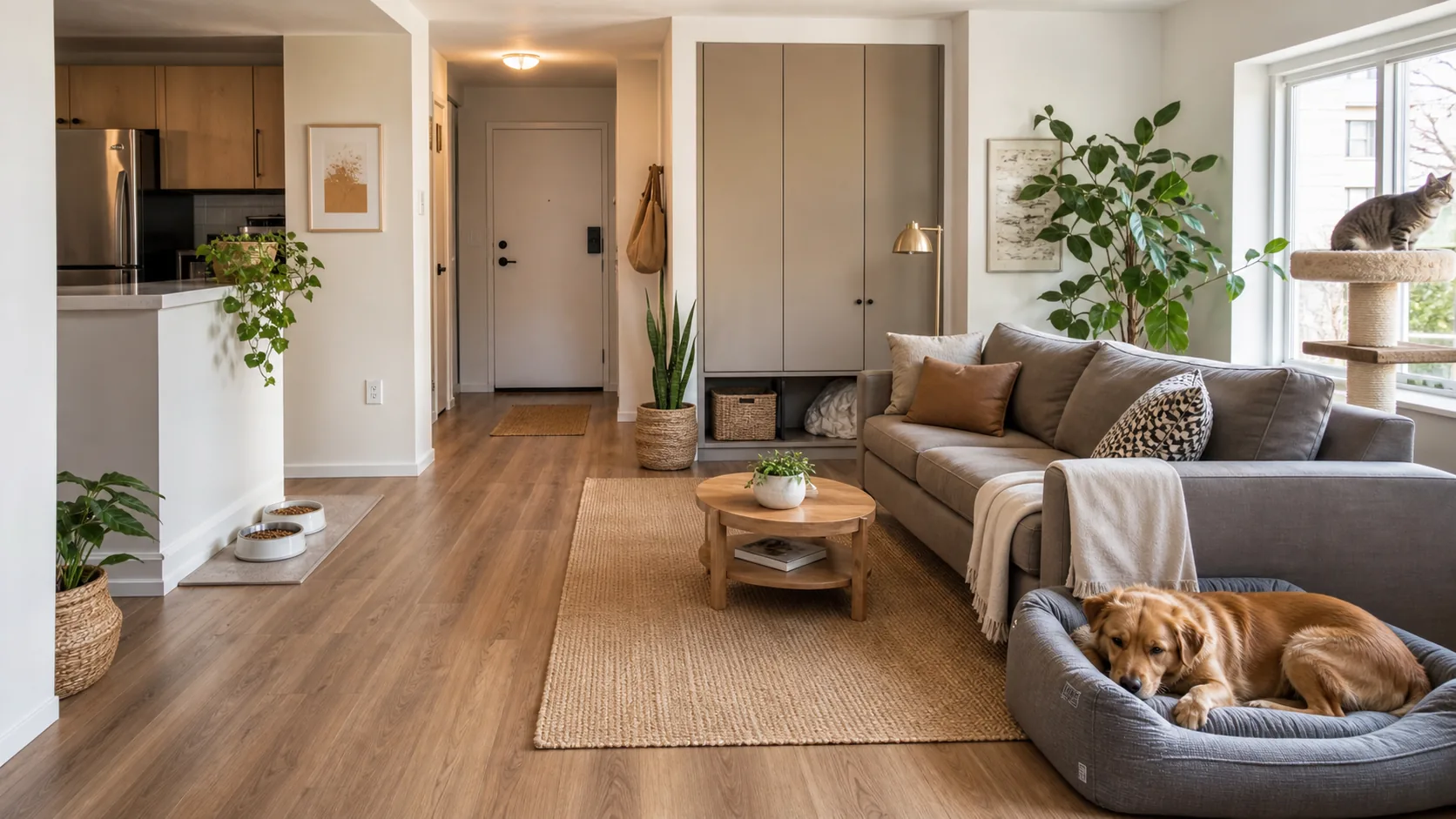
A pet-friendly apartment is not just an apartment with a bed for the dog or a scratching post for the cat. It is a layout that accepts daily movement, shedding, feeding, cleaning, and play without making the home feel messy all the time.
The best plan starts with zones. You need a route for people, a route for pets, a washable feeding area, storage for supplies, and quiet places where the animal can rest without blocking the room. You can sketch those zones in Aedifex before buying pet furniture or moving heavy pieces.
Start with the Traffic Path
Pets repeat the same routes every day: door to water bowl, sofa to window, crate to hallway, balcony to living room. If those routes cut through the dining chairs or around fragile decor, the room will feel chaotic.
Leave clear paths around:
- Entry doors and leash storage
- Water and food bowls
- Litter boxes or puppy pad stations
- Sofa corners and window perches
- Balcony or terrace doors
For dogs, make the route from entry to wipe-down area short. For cats, think vertically: a shelf, cat tree, or window platform can reduce conflict on the floor.
Keep Feeding Away from Main Seating
Food and water bowls should be easy to clean, but they should not sit in the middle of a walking route. A kitchen end panel, laundry corner, entry bench area, or dining-room sideboard can work well if the flooring is washable.
Avoid placing bowls directly beside soft rugs or under the main dining table. Water splashes and crumbs will turn the area into a permanent cleaning task. If the apartment is small, use a narrow mat and keep the bowl station against a wall.
Choose Furniture That Creates Calm Corners
Pets often need a protected place more than a large place. A dog bed beside a sofa, a crate under a console, or a cat bed on a low cabinet can work better than a big standalone item in the middle of the room.
Use furniture to make edges:
- A sofa back can separate play from dining.
- A console can hide pet supplies near the entry.
- A bench can create a shoe and leash station.
- A low cabinet can become a window perch.
If you also need a compact living room plan, compare with Living Room Layout Ideas.
Materials Matter in the Layout
Durability is not only a material choice. It changes where items should go. A washable rug belongs under the play area, not under the water bowl. A leather or tight-weave sofa may be more forgiving than loose fabric, but it still needs enough clearance for cleaning behind it.
Plan for cleaning access:
- Leave room to vacuum around the sofa.
- Avoid narrow gaps where fur collects.
- Use washable mats at the entry.
- Keep litter and food storage near the zone they serve.
If your apartment has timber flooring, add grip where pets run or jump. A layout that looks open can still be stressful if an older dog slips every time it crosses the room.
Cat Layouts Need Vertical Space
For cats, the floor plan is only half the room. Wall shelves, window perches, the top of cabinets, and the back of sofas create a second circulation layer. Vertical space helps cats observe without sitting on counters or blocking the desk.
Place scratching surfaces near where the cat already stretches, usually beside the sofa, bed, or window. Hiding the scratcher in an unused corner rarely works.
Dog Layouts Need Entry Discipline
For dogs, the entry is the pressure point. Design a landing zone with hooks for leashes, a towel, waste bags, treats, and a washable mat. If the entry is narrow, use vertical hooks and a closed shoe cabinet instead of a deep bench.
The goal is simple: muddy paws should not travel across the entire apartment before you can clean them.
Test Before You Buy
In Aedifex, draw the apartment, then add pet beds, bowls, litter boxes, crates, shelves, rugs, and storage. Walk through the day:
- Coming home with a wet dog.
- Feeding before work.
- Cleaning the litter box.
- Guests sitting on the sofa.
- A pet resting while people cook or work.
If one object causes problems in three different routines, move it before buying a larger version.
Common Mistakes
The first mistake is putting pet furniture wherever there is leftover space. Pets use the home on a routine, not as a floor-plan puzzle. Put their things where the routine already happens.
The second mistake is treating storage as optional. Food, treats, grooming tools, toys, litter, and medicine need a place. Without one, the apartment will look cluttered even if the layout is good.
The third mistake is ignoring sound and rest. A bed next to the TV speaker, front door, or washing machine may look efficient, but many pets will avoid it. A good pet-friendly layout gives animals both access and retreat.