Room Divider Ideas for Open Studios: Light, Privacy, Flow
Divide an open studio with shelves, curtains, rugs, screens, lighting, and furniture placement while keeping daylight and circulation intact.
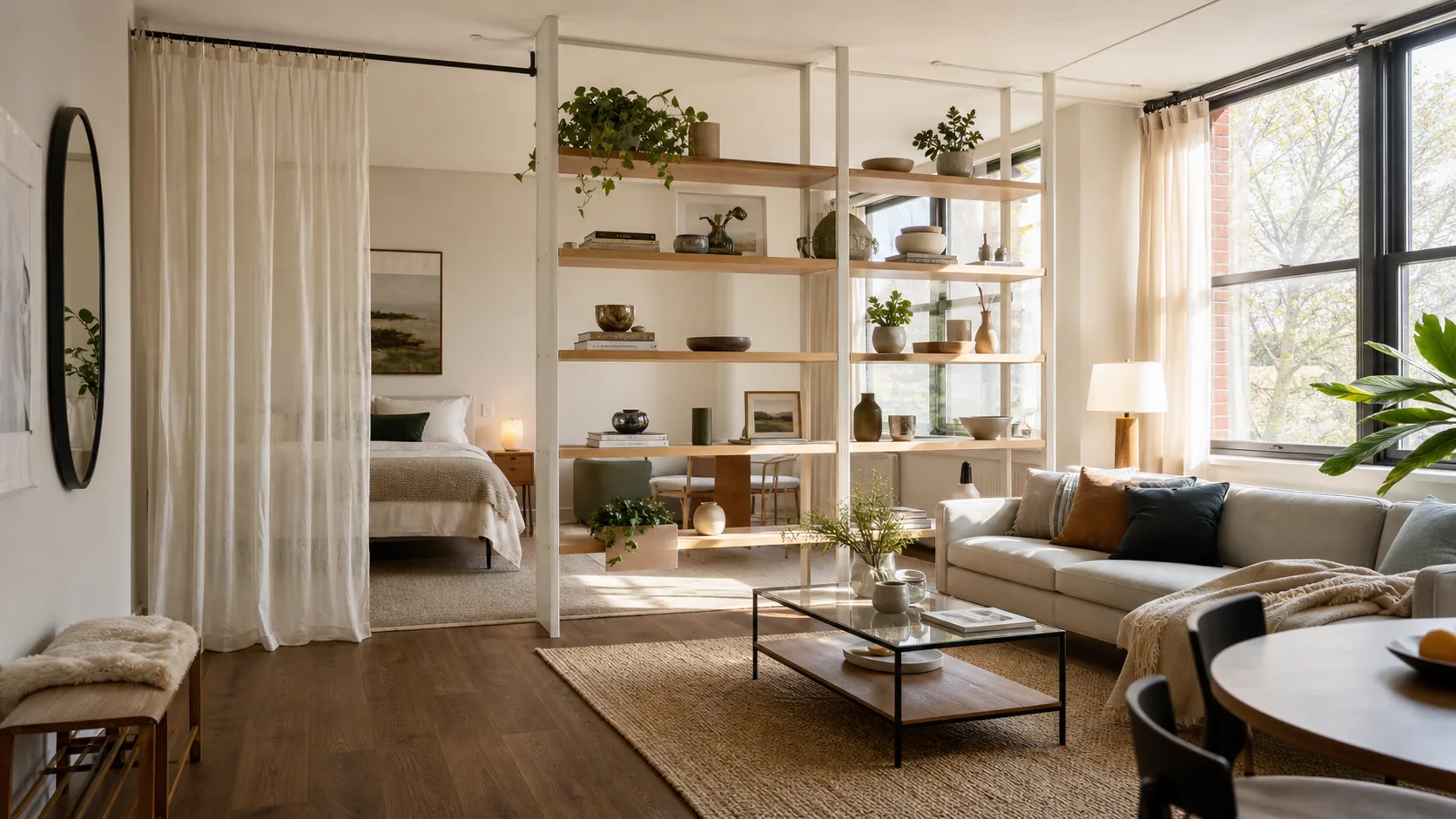
Room dividers work best when they solve a specific problem. A divider can hide the bed, define a home office, soften the dining area, control glare, or create a better entry sequence. If it is added only as decoration, it often makes a studio feel smaller without making it work better.
Before buying a screen or shelf, decide what needs to be divided and what must stay connected. Daylight, airflow, walking routes, and sightlines matter as much as privacy. You can compare divider options quickly in Aedifex.
Start with the Reason
Different problems need different dividers. A bed needs privacy. A desk needs focus. A dining area needs a visual edge. An entry needs a place to slow down and drop keys.
Ask what the divider should do:
- Block a view
- Filter a view
- Store objects
- Reduce noise
- Guide walking
- Create a backdrop
A full-height shelf may be right for storage, but wrong for a dark studio. A curtain may be perfect for sleeping privacy, but too soft for entry storage.
Use Furniture Before Buying Screens
Often the best divider is already part of the room. A sofa back, bookcase, wardrobe, console, or dining bench can create a boundary without adding another object.
Place furniture so it supports the main route. In a studio, furniture floating in the center should align with the way people enter and move. If the divider forces a zigzag path, the room will feel smaller.
For more studio-specific planning, see Studio Apartment Layout Ideas.
Shelves Divide and Store
Open shelving is useful because it divides while letting light pass through. It works well between bed and living area, desk and sofa, or entry and main room. Keep the shelf edited. A divider shelf filled with random storage becomes visual noise.
Use closed boxes on the lower levels and lighter objects above. This keeps the base calm while preserving daylight.
Curtains Are Flexible
Curtains are underrated dividers. They are inexpensive, soft, and easy to open when you want the room to feel larger. Ceiling-mounted curtains can hide a bed, create a dressing zone, or separate a work corner during video calls.
Choose fabric based on the goal. Sheer fabric filters views and keeps light. Heavy fabric creates privacy and improves acoustics, but it can make a small room feel heavier.
Rugs and Lighting Make Invisible Boundaries
Not every zone needs a physical divider. A rug can define the sofa area. A pendant or floor lamp can mark dining. A desk lamp can create a work zone. These invisible boundaries often work better in very small studios because they preserve openness.
Use one or two strong cues rather than many tiny ones. Too many rugs, lamps, and screens can make the apartment look fragmented.
Do Not Block the Window
Natural light is usually the most valuable feature in a studio. Avoid putting a solid divider between the window and the rest of the room. If the bed must be near the window, use a low headboard, open shelf, or curtain that can be pulled aside.
Light should travel through the apartment even if sightlines are controlled.
Test Divider Height
Divider height changes the feeling of the room. Low dividers guide furniture but do not hide much. Half-height dividers add privacy while keeping openness. Full-height dividers create stronger separation but can make the studio feel chopped up.
In Aedifex, test low, medium, and full-height options. Check what you see from the entry, bed, sofa, and desk.
Common Mistakes
The first mistake is dividing too much. A studio still needs to feel like one coherent home, not a set of tiny booths.
The second is choosing an opaque divider for a room that already lacks daylight.
The third is ignoring storage. If the divider does not also support how you live, it may become one more object to clean around. The best divider gives privacy, direction, or storage without stealing the room's best qualities.