Sofa Size Guide for Living Rooms: Scale, Clearance, TV
Choose a sofa size that fits your living room by testing walking paths, coffee table distance, TV viewing, door swings, and storage needs.
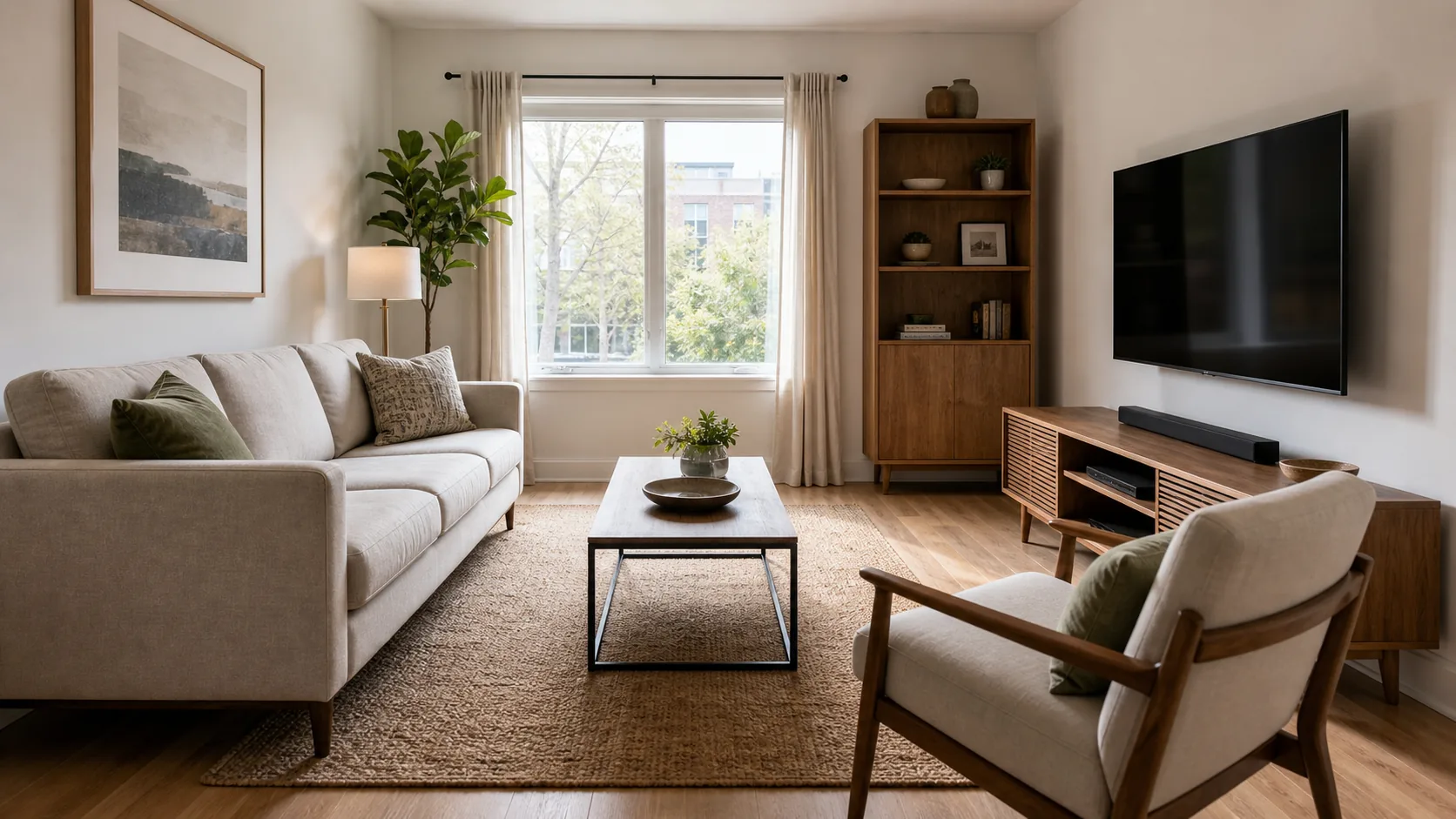
The sofa is usually the largest object in a living room, so its size decides more than seating capacity. It affects walking paths, TV distance, coffee table placement, storage, sunlight, and whether the room feels relaxed or overfilled.
A sofa that looks perfect in a showroom can feel oversized at home because the showroom has no real doors, radiators, toys, side tables, or people walking through. Before buying, draw the room in Aedifex and test the sofa as part of a complete layout.
Measure the Room, Then Measure the Route
Start with the room dimensions, but do not stop there. Measure the doorway, hallway, elevator, stair turn, and any tight corners the sofa must pass through. A sofa that fits the living room but cannot reach it is not a layout solution.
Inside the room, mark:
- Door swings
- Window and radiator positions
- TV wall or media cabinet
- Balcony or terrace access
- Main route from entry to seating
These fixed elements define the maximum sofa size more than the empty floor area does.
Leave Space Around the Sofa
The sofa needs breathing room. It should not trap people against a wall, block a balcony door, or make the coffee table impossible to pass. Even when the sofa is against a wall, leave enough clearance for curtains, outlets, floor lamps, or cleaning.
In open-plan homes, the back of the sofa often becomes a soft boundary between living and dining. That can work well, but only if the path behind it remains comfortable.
Match Sofa Type to Room Shape
A straight sofa is the most flexible choice. It works in small rooms, apartments, and layouts where you may move later.
A sectional is comfortable but demands more planning. The chaise side controls the walking route, TV angle, and coffee table shape. A left-hand chaise that works in one room may fail completely in another.
Two smaller sofas or a sofa plus lounge chairs can be better than one huge sectional when the room has multiple doors or needs conversation seating.
Coffee Table Distance Matters
The coffee table should be close enough to reach, but not so close that knees hit it. If the room is narrow, use a slim table, nesting tables, or side tables instead of forcing a large rectangle into the center.
Check the path from sofa to kitchen, sofa to balcony, and sofa to storage. The coffee table is often the object that turns a good sofa into a cramped layout.
TV Viewing and Conversation
Many living rooms are arranged only around the TV, but daily life usually needs both viewing and conversation. If the sofa is too wide and pushed far back, the room may feel like a small theater. If it is too close, the TV wall dominates everything.
Try angling lounge chairs or adding a small side chair so guests are not all sitting in one row. For more seating patterns, see Living Room Layout Ideas.
Think About Storage Before Buying
If the living room also stores toys, blankets, games, remotes, exercise gear, or pet supplies, the sofa size must leave room for storage. A slightly smaller sofa plus closed cabinet can make the room feel calmer than a larger sofa with clutter around it.
Sofas with storage can help, but they are not a substitute for a real layout. Make sure the lift-up mechanism or drawers can open without hitting the coffee table.
Test Three Sizes
Instead of asking "What is the biggest sofa that fits?", test three options:
- Compact sofa with side chairs.
- Standard sofa with coffee table and storage.
- Sectional or chaise sofa.
In Aedifex, compare how each option affects walking, TV viewing, sunlight, and storage. The best option is usually the one that improves the whole room, not the one with the most seats.
Common Mistakes
The first mistake is buying for occasional guests instead of daily life. A sofa used by two people every day should not make the room uncomfortable for the few times six people visit.
The second is ignoring the chaise direction. A chaise can either open the room or block the main path.
The third is choosing a sofa before choosing the layout. Decide where people enter, sit, talk, watch, and store things. Then choose the sofa that supports that plan.