Wood Flooring Types Compared — Solid, Engineered, Laminate, LVP
Compare solid hardwood, engineered hardwood, laminate, and LVP by cost, lifespan, water resistance, refinishing, resale value, and room fit.
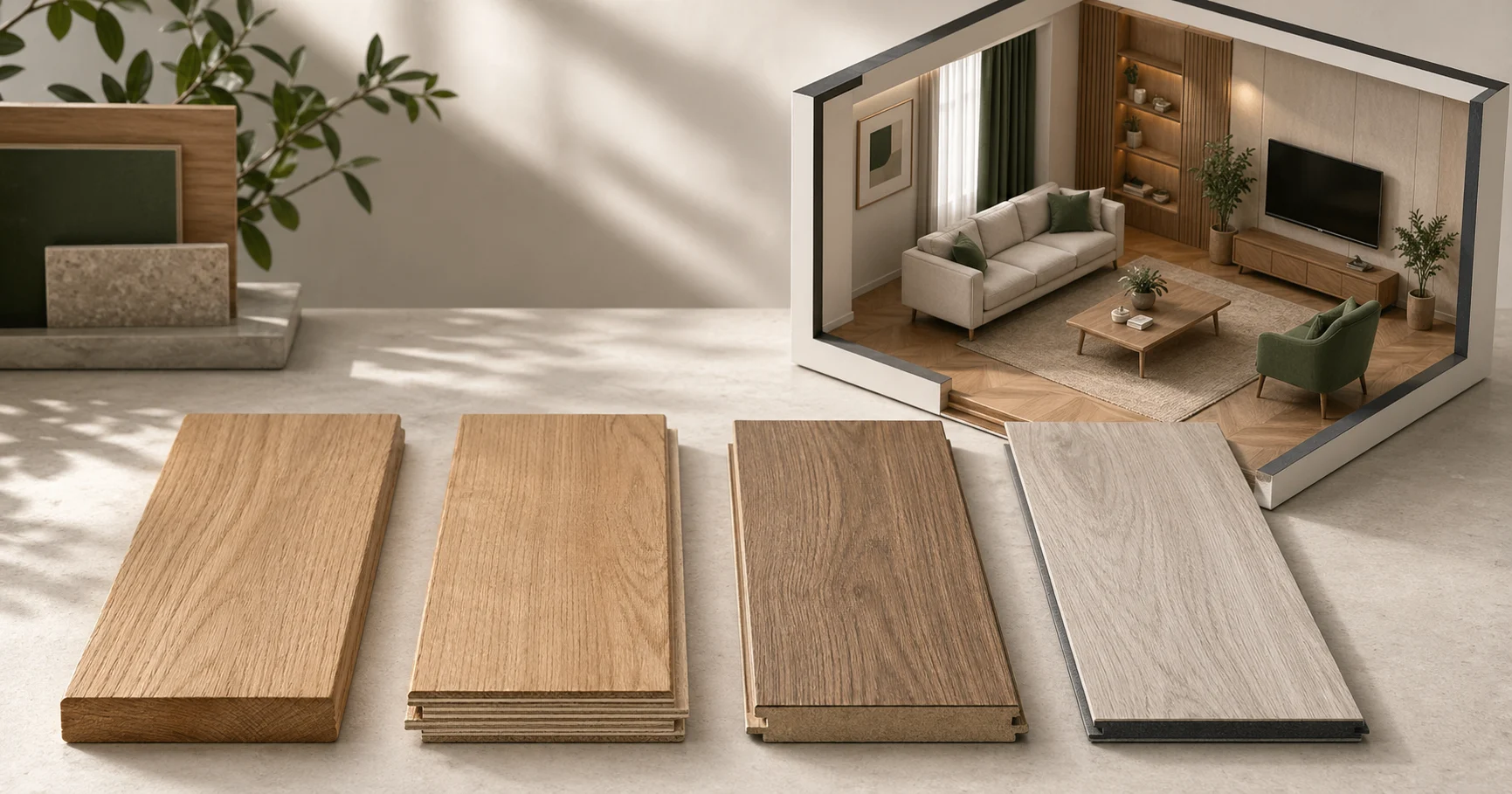
Flooring is the largest visible surface in most rooms, so the wrong choice affects every wall color, every furniture finish, and every daily step. This comparison focuses on the four wood and wood-look categories most homeowners actually choose: solid hardwood, engineered hardwood, laminate, and luxury vinyl plank.
The Four Categories
1. Solid Hardwood
Real wood, milled from a single piece. Typical thickness: 18-22 mm.
Pros: Lasts 50-100 years when maintained. Sands and refinishes multiple times. Develops character as it ages. Usually carries the strongest resale signal.
Cons: Expensive ($8-$20 per sq ft installed in 2026 dollars). Susceptible to humidity (cups and gaps with seasonal change). Not for below-grade installations (basements). Doesn't tolerate standing water.
Where it fits: Living rooms, bedrooms, dining rooms, hallways. Above-grade only.
2. Engineered Hardwood
A real-wood top layer (usually 2-6 mm) bonded to a plywood or HDF core. Typical total thickness: 10-15 mm.
Pros: More dimensionally stable than solid. Tolerates more humidity. Can be installed below grade and over concrete. Cheaper than solid ($4-$12 per sq ft installed). Some can be refinished 1-2 times.
Cons: Real-wood top layer is finite. Premium engineered with thicker top is approaching solid prices. Not water-proof.
Where it fits: Almost anywhere a solid hardwood would go, plus basements and concrete subfloors. Often the better choice for kitchens and entryways.
3. Laminate
A high-density fiberboard core with a printed photographic image of wood under a plastic wear layer. Typical thickness: 8-12 mm.
Pros: Cheapest of the four ($1.50-$5 per sq ft installed). Very scratch-resistant on the surface. Vast pattern selection.
Cons: Can sound hollow underfoot. Edges chip if installed poorly. Most laminates are not water-resistant — water at seams swells the core, ruining the floor.
Where it fits: Bedrooms and offices in budget-conscious renovations. Rentals. Above-grade rooms with low moisture risk.
4. Luxury Vinyl Plank (LVP)
A multi-layer plastic plank with a printed wood image and a textured wear layer. Typical thickness: 4-7 mm. Usually waterproof.
Pros: Genuinely waterproof — can flood and survive. Very durable scratch-wise. DIY-friendly click-lock installation. Wide range from cheap ($2/sq ft) to premium ($6-$8/sq ft).
Cons: Not wood, and it feels different underfoot. Lower-grade LVP can look convincing in photos and plastic in person. It cannot be refinished.
Where it fits: Kitchens, bathrooms, basements, entire homes for renters or for budget renovations. Pets-and-kids households where indestructibility matters.
Quick Comparison Table
| Solid | Engineered | Laminate | LVP | |
|---|---|---|---|---|
| Cost (installed) | $8-$20 | $4-$12 | $1.50-$5 | $2-$8 |
| Lifespan | 50-100yr | 25-50yr | 10-25yr | 10-25yr |
| Water resistance | Poor | Fair | Poor | Excellent |
| Refinishable | Yes (5-10x) | Sometimes (1-2x) | No | No |
| Below-grade OK | No | Yes | Sometimes | Yes |
| Resale value impact | High | Moderate | Low | Low |
| Feel underfoot | Real wood | Close to real | Hollow-ish | Plastic-ish |
How to Pick
Three questions decide it:
1. How long are you staying?
Less than 5 years: LVP or laminate. Real wood usually does not return its cost over that short a stay.
5-15 years: engineered hardwood is usually the sweet spot. Real wood feel, modern installation flexibility, won't break the budget.
15+ years or forever home: solid hardwood. The math shifts — refinishing a few times across decades makes it cheaper per year than replacing engineered or LVP.
2. Where is it going?
Above-grade dry rooms: any of the four work. Pick on price + aesthetic.
Kitchen, bath, laundry, entry: LVP. The waterproofing matters too much to skip.
Basement: LVP or engineered. Skip solid hardwood.
3. What's the actual usage?
Pets with claws plus kids who drop things: LVP or laminate beat real wood for scratch resistance. The aesthetic compromise is real, but the maintenance savings can be worth it.
Quiet, slipper-on household: real wood (solid or engineered) wins on feel and aesthetic.
Try It in 3D
The decision often comes down to what the floor looks like in your specific room with your specific lighting. Open Aedifex and try multiple flooring textures in the same room, switching between morning and evening lighting. The wood that looks great in the showroom often looks wrong in a room with cool north light, and vice versa.
The Aedifex catalog includes oak, walnut, parquet, and other wood looks. Use it to narrow the direction before ordering physical samples.
Related Reading
- Lighting Design for Small Rooms — flooring tone interacts with lighting choice
- Renovation Budget Planning Checklist — flooring is usually the second-largest line after kitchens
- Scandinavian Interior Design Guide — light wood floors are core to this style
Subfloor and Installation Questions
The floor you can install depends on the subfloor. Concrete, plywood, old tile, radiant heat, moisture risk, and height transitions all change the decision. A product that works perfectly over plywood may need a vapor barrier or different adhesive over concrete.
Check the finished floor height before ordering. New flooring can create awkward transitions at doors, stairs, cabinets, and appliances. In kitchens, a thick floor can trap dishwashers under counters or require trim changes.
Acoustics also matter, especially in apartments. Laminate and some floating floors can sound hollow without the right underlayment. Building rules may require specific acoustic ratings. Confirm this before buying a click-lock floor for an upper unit.
Finish, Plank Width, and Color
Wide planks can make a room feel calmer, but very wide boards in a small or uneven room may show movement and gaps more clearly. Narrower planks can suit older homes and smaller rooms. The right choice depends on architecture, not only trend.
Matte and satin finishes usually hide daily wear better than glossy finishes. Gloss shows scratches, dust, and footprints. If the home has pets or children, avoid finishes that look perfect only when freshly cleaned.
Color shifts under lighting. A pale oak can look yellow in warm light, gray in cool light, and flat in a north-facing room. Always test physical samples in the actual room before committing.
Maintenance Reality
Solid and engineered wood need humidity awareness. Use felt pads, clean spills quickly, and keep indoor humidity within the recommended range. Refinishing is a long-term advantage, but it is not a reason to ignore daily care.
Laminate and LVP are easier to maintain, but they are not indestructible. Sharp grit can scratch wear layers. Cheap LVP can dent under heavy furniture. Standing water may be fine for the plank but still damage trim, subfloor, or adjacent rooms.
The best flooring is the one that matches the household's tolerance for maintenance. A quiet adult home can enjoy real wood. A rental, basement, or pet-heavy household may be better served by a durable lookalike.