Rental Kitchen Upgrade Ideas: Better Layout Without Renovation
Improve a rental kitchen without renovation by planning prep zones, temporary storage, lighting, carts, removable finishes, and renter-safe workflows.
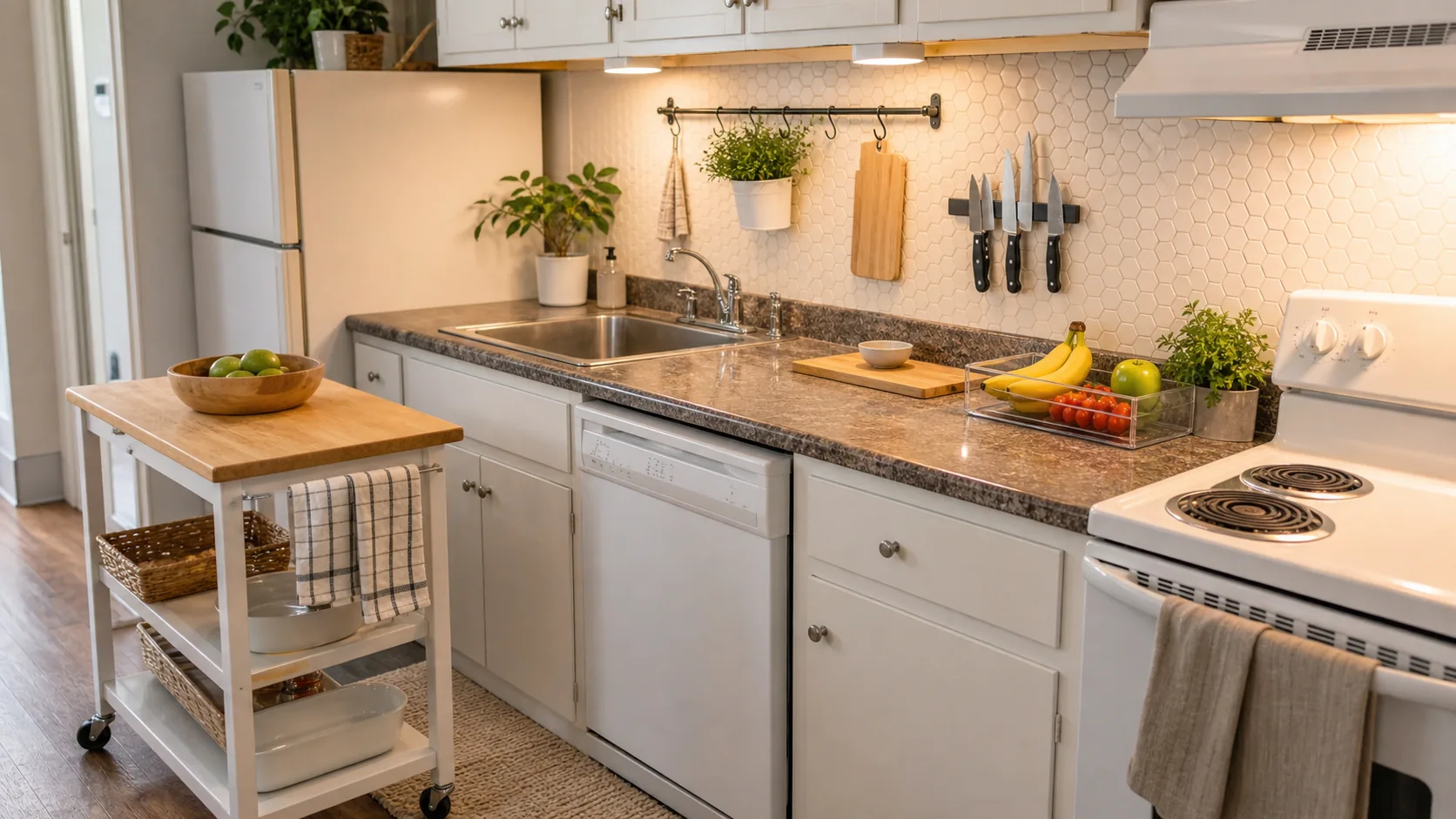
A rental kitchen can be frustrating because the biggest problems often seem fixed: bad cabinets, poor lighting, too little counter space, or an awkward fridge location. But many kitchens can work better without renovation if you improve the workflow instead of fighting the shell.
The goal is not to create a magazine kitchen. It is to make cooking, cleaning, storage, and serving easier with changes you can remove later. Start by drawing the kitchen, then test temporary storage and prep zones before buying organizers.
Fix the Prep Zone First
Most rental kitchens fail at prep. The counter beside the sink is too small, the only open surface becomes a drying rack, or appliances occupy the best work area.
Clear one primary prep zone. It does not need to be huge, but it should be stable, well lit, and near the sink or trash. Move rarely used appliances off the counter. If the counter is tiny, add a narrow cart, folding table, or over-sink board.
Add Storage Where the Routine Happens
Temporary storage works best when it supports a specific task. A cart away from the cooking area can hold oils, spices, and utensils. A wall rail can hold tools. A shelf near the coffee maker can hold mugs and filters.
Avoid buying generic organizers before you know the routine. Organizers without a task simply move clutter from one shape to another.
Use Vertical Space Carefully
Renter-safe vertical storage can be powerful: tension poles, over-door racks, magnetic strips, freestanding shelves, and adhesive hooks rated for the surface. But vertical storage should not make the kitchen feel busy or hard to clean.
Keep heavy items low. Put light, repeated-use items at eye level. Do not hang tools where they interfere with cabinet doors, stove safety, or sink splashes.
Improve Lighting Without Rewiring
Poor lighting makes a kitchen feel smaller and less clean. Under-cabinet plug-in lights, rechargeable task lights, and a small lamp on a shelf can change the room dramatically.
Place light where work happens: cutting, washing, cooking, and reading labels. Decorative light alone will not fix a dark prep surface.
Make Removable Finishes Practical
Peel-and-stick tile, contact paper, removable wallpaper, and washable mats can help, but use them selectively. Focus on areas that improve cleaning or visual calm, not every surface.
Before applying anything, test a hidden spot and read lease rules. Heat, moisture, and textured surfaces can make removable finishes fail.
Create a Landing Zone
Many rental kitchens lack a place to set groceries, mail, or takeout. Add a small landing zone near the kitchen entrance if possible. It can be a cart, a tray on a shelf, or a narrow console.
This prevents bags from occupying the stove, sink, or dining table every time you come home.
Keep the Exit Plan in Mind
Every upgrade should be removable, cleanable, and easy to document. Keep original parts, avoid drilling unless allowed, and photograph the condition before changes.
Renter-friendly design is partly about the future move-out inspection. A solution that damages the cabinet finish is not renter-friendly, even if it looks good for a year.
Test Before Buying
Draw the kitchen and physically test:
- Where groceries land.
- Where food is washed and chopped.
- Where hot pans go.
- Where dishes dry.
- Where daily tools live.
- How the kitchen returns to clean.
For broader rental planning, read Rental Apartment Design Without Renovation and Apartment Kitchen Layout Ideas.
Common Mistakes
The first mistake is buying containers before removing unused items. Storage cannot solve volume that does not belong in the kitchen.
The second is covering every surface with temporary finishes. A few calm improvements usually look better than a patchwork of contact paper.
The third is ignoring workflow. The best rental kitchen upgrade is the one that makes Tuesday night dinner easier, not the one that only photographs well.
Compare two ways to recover a prep surface
In this hypothetical kitchen, the only usable counter must hold a cutting board and bowl, but a drying rack and a small appliance occupy it. Before buying, put the actual board and bowl side by side and note which objects prevent that use. This is a task test, not a claim about a real apartment or measured time saving.
| Trial | What it gains | What to check before keeping it |
|---|---|---|
| Move the appliance to an existing shelf and use a smaller removable drying rack | Frees the counter without attaching anything | Shelf stability, appliance weight, cord reach in use, and where wet dishes drain. Unplug and let the appliance cool before storing it. |
| Use a freestanding cart as a temporary work surface | Adds a separate place for preparation | Whether it rocks under pressure, blocks doors or the exit, and stays clear of heat and splashes. Lock wheels if fitted; a cart without adequate stability is not a safe cutting surface. |
Try the candidate during one ordinary meal, including cleanup. Record what still has no home and whether the refrigerator, drawers and window can open. If both options obstruct the route or leave wet dishes with nowhere to drain, return to the first step rather than buying a larger organizer. The interactive exercise separates recovering the counter from assigning displaced items and checking removal.
A practical permission and removal record
Before attaching a light, rail or film, write down the exact surface and product, what the lease says, and any written permission or remaining question. Photograph the original condition. Check the product's instructions for that surface, heat, moisture, load and removal; a hidden-area test can reveal an immediate problem but cannot guarantee that a finish will survive long-term contact. If permission or compatibility is uncertain, leave the item unattached until resolved. Keep original parts and the record for move-out; the lease and local rules determine the actual obligations.
The U.S. Consumer Product Safety Commission advises remaining in the kitchen while cooking and keeping stovetops clean and clear (accessed 27 October 2026). Keep movable storage and its contents out of the cooking area; the guidance does not certify any particular cart placement.
Rental Kitchen Upgrade Ideas: Better Layout Without Renovation
An authored rental scenario has one preparation surface crowded by small appliances and drying dishes. The tenant wants a reversible change, so the comparison starts with removing conflicts before buying adhesive finishes or another cart.
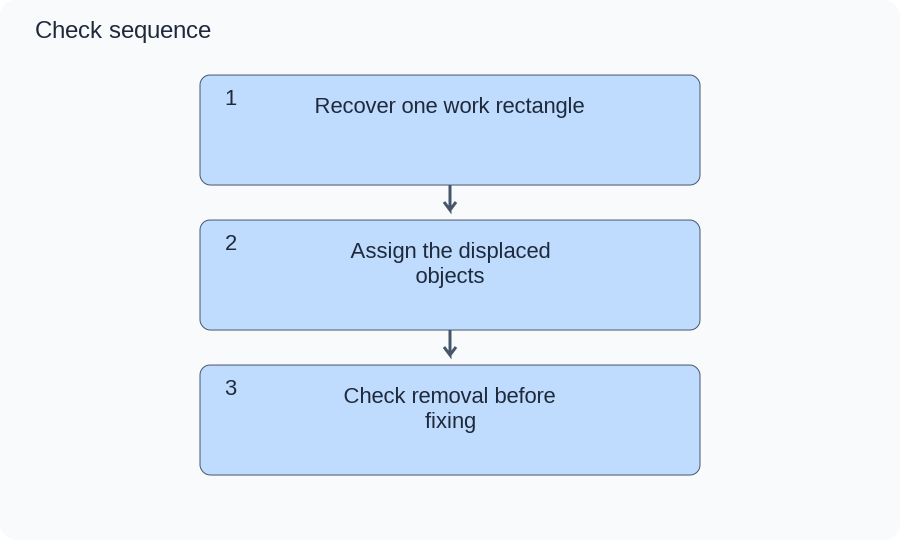
The sequence separates recovering prep space, relocating storage and checking reversibility. The evidence matrix records what each step still needs; it does not imply landlord approval or measured savings.
Numbers and marks identify the items described here; use the stated dimensions rather than measuring the screen.
1–3 refer to the evidence steps below. A highlighted step is selected, not automatically verified.
| Step / option | What to check |
|---|---|
| 1. Recover one work rectangle | Put the actual cutting board and bowl together, then list only the objects preventing their simultaneous use. |
| 2. Assign the displaced objects | Give each appliance and drying rack a permitted working or storage position, keeping plug and window access visible. |
| 3. Check removal before fixing | Compare freestanding and attached alternatives using the tenancy rules and exact product removal instructions, recording unresolved permissions. |
Changed conditions and evidence
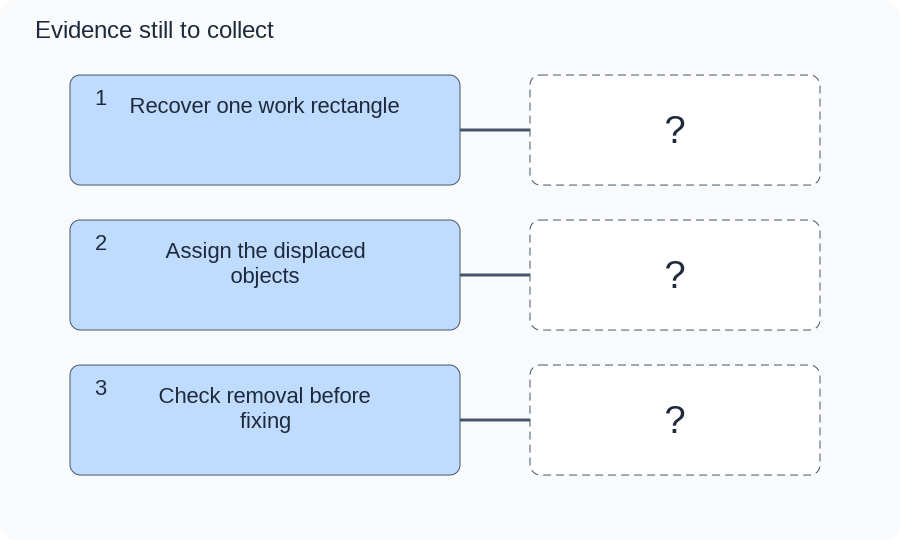
If a new rack clears the counter but blocks the outlet or window handle, reject that position. A smaller removable drying setup can preserve access at the cost of more frequent dish handling.
The question marks are evidence still to obtain, not a completed check.
Cook one normal meal with temporary freestanding props and document where every displaced item goes. Read the tenancy terms and product surface-compatibility instructions before attaching anything; removable marketing does not prove damage-free removal.
TRY THE EXAMPLE
Rental Kitchen Upgrade Ideas: Better Layout Without Renovation
An authored rental scenario has one preparation surface crowded by small appliances and drying dishes. The tenant wants a reversible change, so the comparison starts with removing conflicts before buying adhesive finishes or another cart.
Put the actual cutting board and bowl together, then list only the objects preventing their simultaneous use.
Cook one normal meal with temporary freestanding props and document where every displaced item goes. Read the tenancy terms and product surface-compatibility instructions before attaching anything; removable marketing does not prove damage-free removal.
Teaching assumptions, not a surveyed home or a construction check. Results describe this simplified geometry or budget only. Changes stay on this page and reset on reload.