Room Layout Around Radiators: Heat, Safety, Clearance
Arrange sofas, beds, curtains, desks, shelves, and televisions around radiators while preserving heat flow, thermostat accuracy, maintenance, and safety.
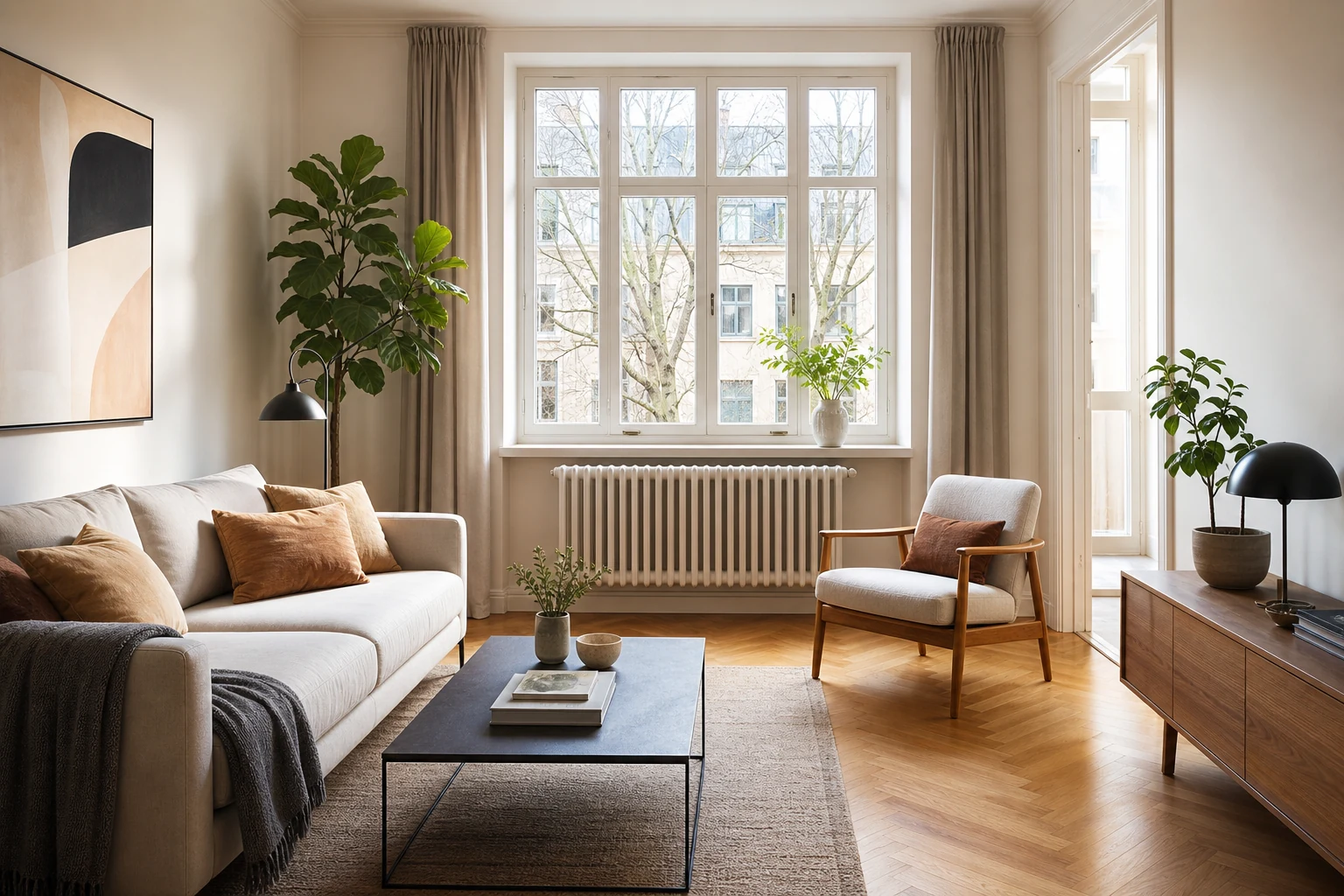
A radiator is not an awkward rectangle to hide after furniture is placed. It is a heat source with air movement, controls, valves, maintenance needs, and material clearances. Blocking it can make the room heat unevenly, distort thermostat readings, damage finishes, and increase energy use. Map the heating system before deciding where the sofa, bed, desk, curtains, and television belong.
Identify the Heater, Controls, and Manufacturer Rules
Record whether the room uses a panel radiator, cast-iron radiator, convector, electric heater, heated towel rail, or another system. Each transfers heat differently. Find valves, thermostatic radiator valves, bleed points, isolators, electrical outlets, and pipes. Read current manufacturer instructions for minimum clearances and allowed coverings; those requirements override generic advice.
Measure the radiator’s full projection, not only the panel. Include valve heads, pipework, brackets, and a hand space for operation. Check surface temperature and whether children or vulnerable people need a guard. Any guard must be designed for the heater and preserve airflow.
Understand the Air Path
Many radiators warm air that rises and draws cooler air beneath. Furniture tight to the front can reduce that circulation and trap heat against upholstery or timber. A deep shelf directly above can interrupt rising air and stain the wall. Radiant heat also warms nearby surfaces, so material and distance matter.
Use the manufacturer’s front, side, above, and below clearances. Where no specific value is supplied, do not invent one; ask the heating professional who maintains the system. Keep the entire path visible in the model so a later furniture purchase does not close it.
Place Sofas Without Creating a Heat Pocket
A sofa directly against a radiator can become hot at the back while the rest of the room stays cool. It also blocks valves and makes cleaning difficult. Prefer placing the sofa perpendicular to the radiator or on another wall. If it must sit in front, preserve the required front clearance and access, and verify upholstery temperature and heat output with the manufacturer or installer.
Do not push loose throws, cushions, or pet beds into the gap. A sofa may shift during use, so floor pads or a discreet stop can preserve the tested position. Ensure the remaining furniture arrangement still keeps a clear route to the door.
Keep Beds and Bedding Clear
Avoid a bed directly against a radiator, especially at the headboard. Heat can make sleep uncomfortable, dry the air locally, and expose bedding to a hot surface. Draw the duvet in its hanging position, not only the mattress. A fabric headboard, storage drawer, or dropped blanket can reduce the intended gap.
For a radiator under a bedroom window, place the bed on a side wall where possible and preserve curtain operation. If the only layout puts a bed nearby, confirm system-specific clearance, guard needs, and access to the valve. The king-bed layout guide helps test alternative routes.
Treat Curtains as Moving Objects
Curtains can be pulled over a radiator even if they are clear when open. Full-length fabric may trap heat, affect thermostatic valves, or contact an electric heater. Use a sill-length treatment, stop curtains safely to the sides, or choose blinds where appropriate. Follow heater and textile safety guidance.
Check the full stack width when curtains are open and the drape when closed. Do not let a plant stand or chair force the fabric back over the heat source. Window treatments should still allow ventilation and cleaning.
Position Desks and Shelves Carefully
A desk above or in front of a radiator may create uncomfortable leg heat and expose computers, batteries, paper, and cables. It can also cause the thermostat to read a trapped hot pocket and shut the room heating early. Place the desk beside the radiator where possible, with the user and equipment outside required clearances.
Radiator shelves are sometimes used to deflect heat or create display space, but their dimensions, material, wall condition, and separation affect performance. Use only an approach compatible with the heater and installer guidance. Never place candles, aerosols, electronics, plants, or heat-sensitive art above the radiator without confirming conditions.
Protect Televisions and Media Units
Electronics depend on their own ventilation limits and operating-temperature ranges. Do not position a television or media cabinet where rising hot air enters vents or where cables touch pipes. A screen above a radiator may face both heat and glare from the window. Verify both appliance and heater requirements before accepting the location.
Keep power strips and adapters away from heat and accessible for inspection. Permanent electrical changes belong with a qualified electrician. If the room has no workable media wall after respecting the radiator, consider a smaller display, projector, mobile stand, or different seating orientation.
Preserve Valve and Maintenance Access
The user or technician must reach the thermostatic valve, bleed point, isolator, fixings, and nearby floor. Leave enough room to remove a cover where required and protect flooring during service. A built-in cabinet that cannot be disassembled can turn a simple valve replacement into demolition.
Plan a cleaning route behind and under the unit. Dust reduces convection and creates odors when heating begins. If there is evidence of leaks, corrosion, cold spots, or unusual noise, have the system inspected rather than hiding it.
Coordinate Thermostats and Furniture
Room thermostats and thermostatic radiator valves need representative air, not trapped heat behind curtains or a cold draft from an open window. Tall furniture, screens, and covers can distort readings. Follow the controls manufacturer’s placement guidance and ask an installer before relocating any sensor.
Zoned or smart heating adds occupancy sensors and wireless communication. Confirm that furniture does not block controls or make battery replacement difficult. A smart schedule cannot correct a physically blocked heat path.
Check Safety and Special Users
Electric heaters and portable heaters require especially strict clearances and should never be treated like low-temperature hydronic radiators. Keep combustibles away exactly as specified, avoid extension leads unless approved, and never dry clothes over a heater not designed for it.
Children, older adults, pets, and people with reduced sensation may need surface-temperature protection or a designed guard. The guard must not create climbing, entrapment, or blocked-flow risks. Seek professional advice for the specific user and heater.
Simulate Winter Use
Build the room in Aedifex with the full radiator projection, valves, manufacturer clearance envelope, curtains open and closed, furniture, bedding, cables, and circulation. Test sitting, sleeping, working, opening the window, cleaning, adjusting the valve, and servicing the unit.
Use the room planner to compare furniture rotations rather than forcing a large sofa onto the radiator wall. The window-treatment guide can help coordinate privacy and heater access.
Radiator Layout Checklist
- Identify heater type, manufacturer, output method, valves, controls, pipes, and power.
- Use system-specific front, side, top, and service clearances.
- Keep sofa backs, beds, bedding, pet beds, and loose textiles out of the heat path.
- Test curtains both stacked and fully closed.
- Keep desks, electronics, paper, plants, and cables away from trapped heat.
- Preserve valve, bleed, isolation, cover-removal, cleaning, and technician access.
- Keep thermostats and sensor heads exposed to representative room air.
- Add guards only when designed for the heater and actual user.
- Model winter behavior, not just the summer furniture plan.
The radiator should shape the room plan early, not become an obstacle hidden late. Once heat flow and access are protected, use the interior planner to refine the furniture group and register to save the winter-ready version.
Room Layout Around Radiators: Heat, Safety, Clearance
Assume a sofa is proposed on the same wall as an existing radiator and a full curtain. The task is to preserve the exact heater’s air path and service access while finding a useful seating position.
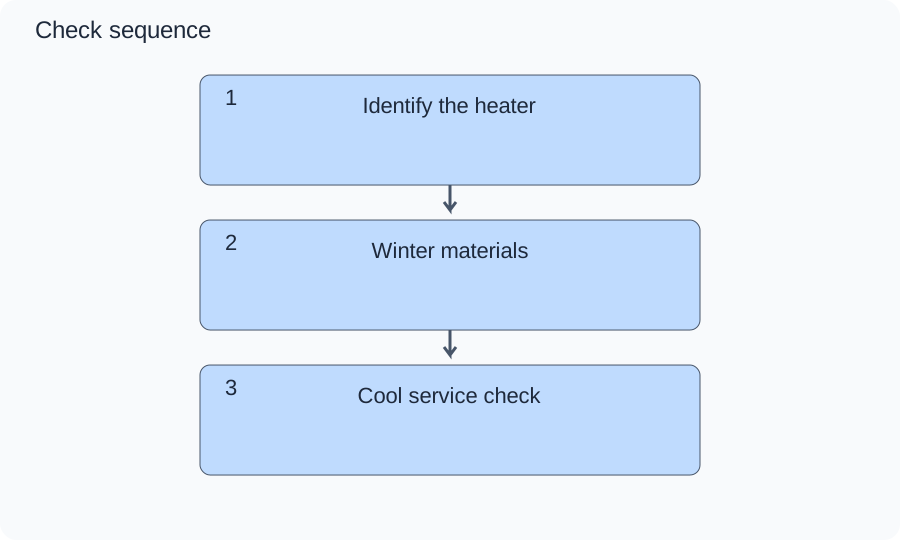
The sequence identifies the heater, adds winter fabrics and checks cool service access. Evidence must include the actual heater instructions and valve access; an empty gap is not itself thermal verification.
Numbers and marks identify the items described here; use the stated dimensions rather than measuring the screen.
1–3 refer to the evidence steps below. A highlighted step is selected, not automatically verified.
| Step / option | What to check |
|---|---|
| 1. Identify the heater | Identify whether the unit is water-filled, electric or another heater type. Obtain that exact model’s combustible and airflow instructions before drawing furniture gaps. |
| 2. Winter materials | Place curtains and bedding in their normal closed or draped positions with the heater safely cool. Mark any fabric that can enter a prohibited zone. |
| 3. Cool service check | Reach the valve and service panel without moving the planned sofa. Reject the arrangement if required maintenance access depends on dismantling unrelated furniture. |
Changed conditions and evidence
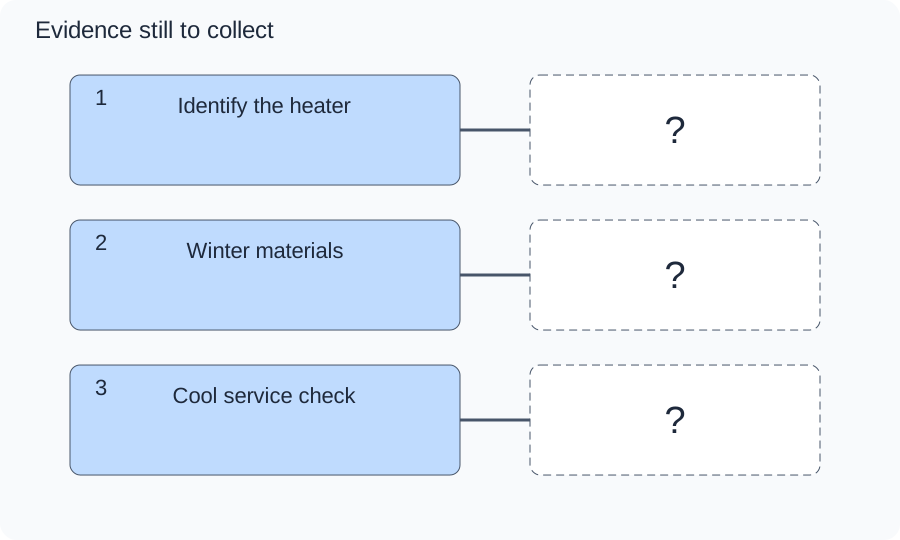
If keeping the sofa parallel requires hiding the radiator behind fabric, compare a perpendicular sofa or another wall. The revised arrangement may reduce visual symmetry but avoids making thermal suitability depend on furniture appearance.
The question marks are evidence still to obtain, not a completed check.
Identify the heater type and obtain its installation and combustible-clearance instructions. Check valves, controls and cleaning access with the unit safely cool; use qualified advice for changes and never cover a heater to perform the test.
TRY THE EXAMPLE
Room Layout Around Radiators: Heat, Safety, Clearance
Assume a sofa is proposed on the same wall as an existing radiator and a full curtain. The task is to preserve the exact heater’s air path and service access while finding a useful seating position.
Identify whether the unit is water-filled, electric or another heater type. Obtain that exact model’s combustible and airflow instructions before drawing furniture gaps.
Identify the heater type and obtain its installation and combustible-clearance instructions. Check valves, controls and cleaning access with the unit safely cool; use qualified advice for changes and never cover a heater to perform the test.
Teaching assumptions, not a surveyed home or a construction check. Results describe this simplified geometry or budget only. Changes stay on this page and reset on reload.